Ultimate Marrakech Nightlife Guide: Bars, Clubs & Hidden ...
[ez-toc] The Ultimate Marrakech Nightlife Guide: Where to Experience the Magic After Dark Marrakech transforms as the sun sets, revealing a vibrant nightlife scene that...
Marrakech is loud, dense, and genuinely wonderful — but after two or three days in the medina, most visitors are ready for something different. The good news is that the city sits at the edge of some of Morocco’s most varied landscapes. Mountains, coast, waterfalls, desert: most are within two to three hours in any direction.
We’ve driven these routes more times than we can count. Some are worth every kilometre. A few are overhyped. This guide tells you which is which, what things actually cost, and how to avoid the rookie mistakes that turn a great day out into an exhausting one.
| Destination | Drive from Marrakech | Cost (per person) | Best for |
|---|---|---|---|
| Atlas Mountains & Berber villages | 40–90 min | $60–$80 | Culture, light hiking |
| Essaouira | 2.5–3 hrs | $70–$90 | Coast, seafood, relaxed medina |
| Ouzoud Waterfalls | 2.5–3 hrs | $70–$90 | Nature, waterfalls, monkeys |
| Ouarzazate & Aït Ben Haddou | 3.5–4 hrs | $100–$150 | Film sets, kasbahs, photography |
| Agafay Desert | 40 min | $60–$80 | Desert feel without the long drive |
| Ourika Valley | 1 hr | $60–$70 | Families, riverside lunch, easy hike |
| One-day Sahara (Zagora) | 6–7 hrs | $150–$200 | Not recommended — see note below |
| Imlil & Toubkal National Park | 1.5 hrs | $70–$90 | Serious hiking, mountain villages |
| Ouzoud + Bin El Ouidane Lake | 2.5–3.5 hrs | $100–$140 | Off the beaten path, nature |
| Setti Fatma & Seven Waterfalls | 1.5 hrs | $60–$80 | Hiking, waterfall trail, scenic valley |
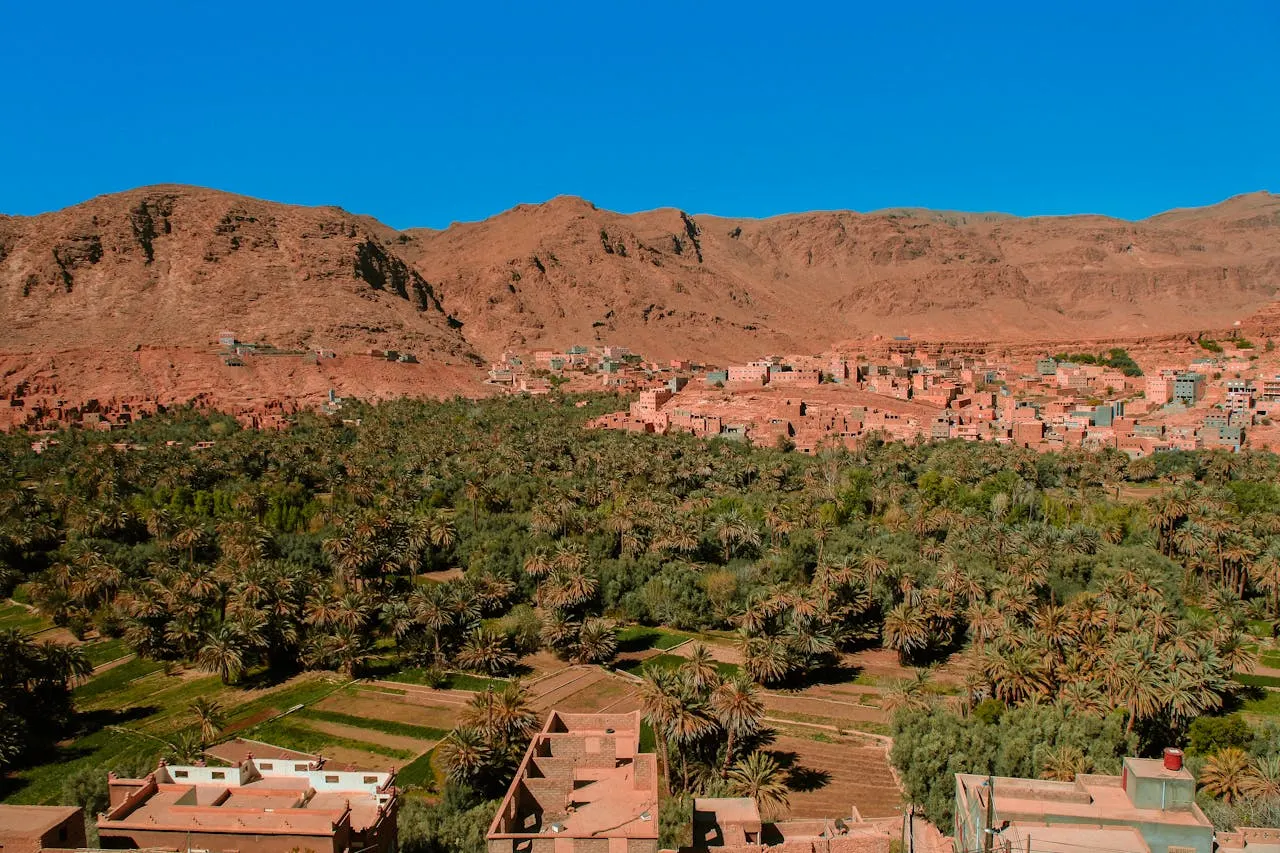
Forty minutes from the Djemaa el-Fna and you’re in a different country. The mud-brick houses, walnut terraces, and mule tracks of the High Atlas feel genuinely removed from the city — not “authentically restored for tourists” removed, but actually different in the way rural Morocco has been for centuries.
Most tours head to the Ourika Valley (easier road, good for families) or up to Imlil and the villages around Jebel Toubkal. The Ourika route passes through the town of Tahanaout, which has a Tuesday market worth stopping at if your timing works out. Further up, the seven-tiered Setti Fatma waterfalls are a 30-minute hike from the road — crowded on summer weekends, quiet on weekday mornings.
Imlil sits at 1,800 metres and gets noticeably cold, even in July. The surrounding villages of Armed and Aremd are a 45-minute walk from the car park through terraced fields. You don’t need a guide for this stretch, though local guides do know the less-obvious paths and are reasonably priced ($15–$20 for a half-day). For the Tizi Mzik pass or anything higher, a guide is genuinely useful.
One thing to know: the Atlas Mountains are on every tour operator’s menu, which means some “Berber village” stops are basically a mint tea with a souvenir shop attached. Book with operators who include an actual home visit or a meal with a family rather than just a photo stop. The difference in experience is significant.
Pack a layer even in summer — the temperature drops fast above 1,500 metres. Book an Atlas Mountains day tour that includes time in a local home, not just photo stops at viewpoints.
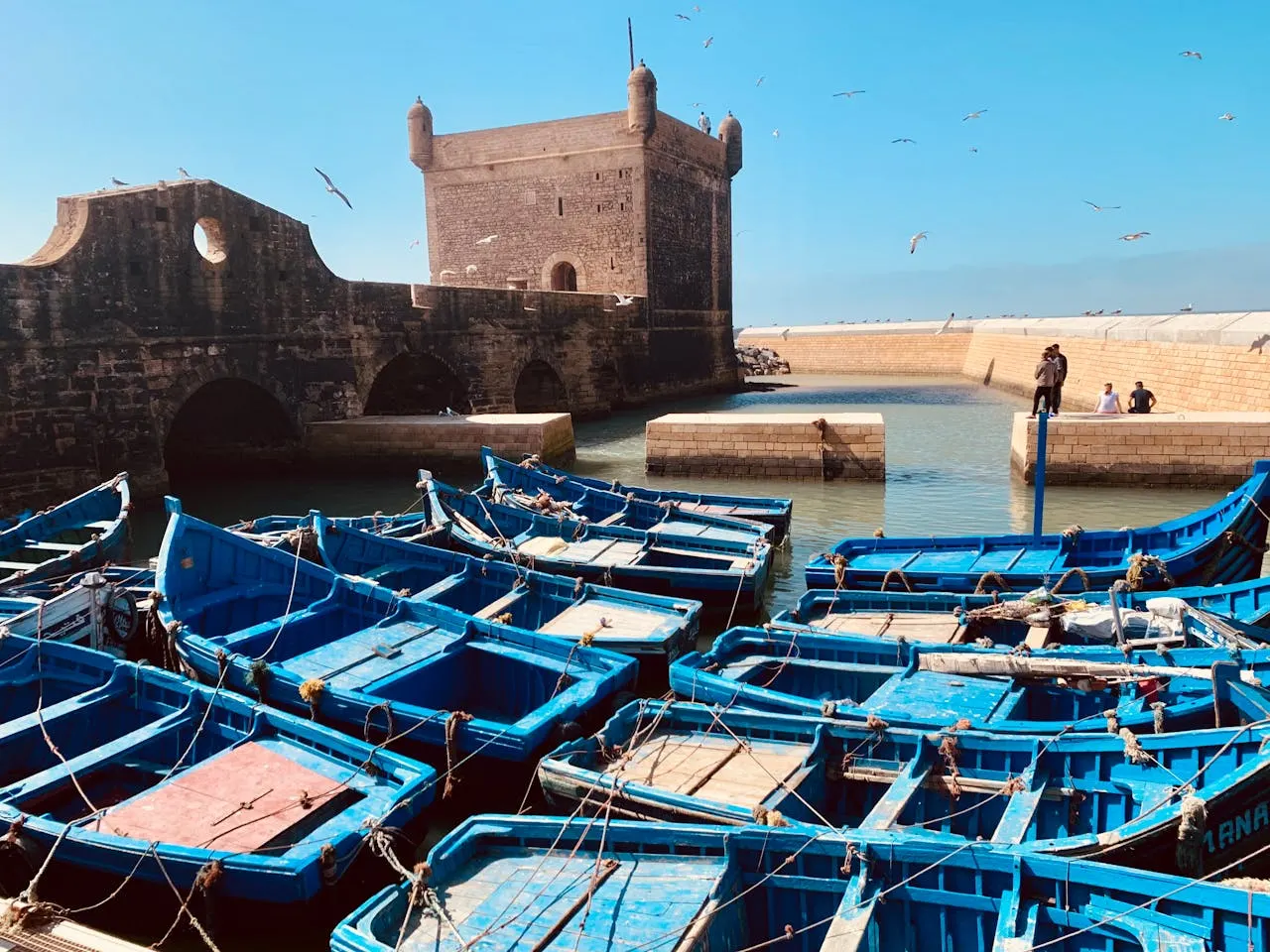
Essaouira is the decompression chamber after Marrakech. The medina is UNESCO-listed and genuinely pretty — blue-and-white walls, carved wooden screens, a port that still operates as an actual fishing harbour — but the real reason most people go is that nobody hassles you. Shopkeepers are relaxed. You can browse, sit, wander, and eat without anyone following you down an alley.
The 18th-century ramparts overlooking the Atlantic are worth the 20-minute walk. The fish market near the port sells what came in that morning, and the grill stalls nearby will cook it for you on the spot — easily one of the best cheap lunches in Morocco. Thuya wood workshops are scattered through the medina if you want to watch craftsmen at work; the inlaid boxes and chess sets they make are the best souvenir you can carry home from this part of the country.
Game of Thrones fans will recognise the port area from the Astapor scenes in Season 3. It’s subtle enough that you can enjoy the location without it feeling like a theme park.
The downside is the drive: three hours each way is a lot for a single day. If you go by public bus (CTM, around $8–$10 each way), you get there at a reasonable hour but lose flexibility on timing. A private driver gives you more time on the ground and lets you stop at the argan oil cooperatives on the Chichaoua road, which is worth 20 minutes if you haven’t seen argan processing before.
The wind is real. Essaouira is one of the best windsurfing and kitesurfing spots in Africa, which means beach relaxation outside June–August can be genuinely uncomfortable. Plan accordingly.
More on what to do once you’re there: Essaouira’s hidden beaches and activities guide.
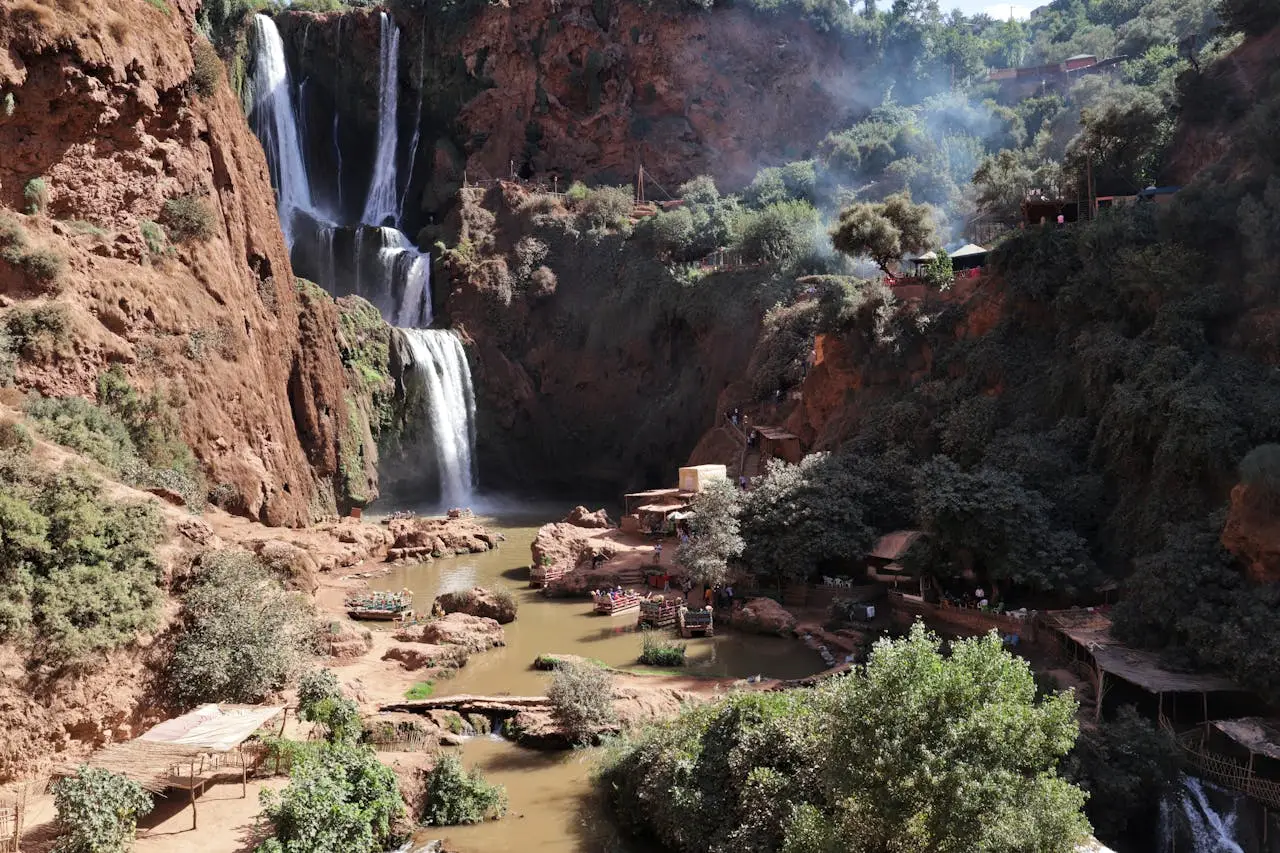
At 110 metres, Ouzoud is the tallest waterfall in North Africa, and it earns the trip. The mist at the base is noticeable from 200 metres away on a still day. In spring, after the Atlas snowmelt, the volume is genuinely dramatic — three separate falls crashing into a green pool with rainbows appearing in the spray.
The descent from the car park takes about 20–25 minutes on a well-maintained path. Barbary macaques (the local monkeys) have figured out that tourists carry snacks, so they’re everywhere along the trail — entertaining but persistent. Don’t feed them; it makes them aggressive with other visitors.
At the bottom, there are small restaurants with terrace seating right on the pool. A tagine here, with the falls in front of you and the sound of the water, is one of those lunch situations that’s hard to improve on. A short wooden boat takes you right into the mist for around $2 — five minutes, soaking wet, completely worth it.
The traditional oil mills (maasras) powered by water channels near the base are genuinely interesting — an ancient system that still processes olives into oil every autumn. Most tour groups walk straight past them.
Summer visits are fine, though the water level drops significantly in August. Spring is the best time. If you’re combining this with Bin El Ouidane Lake (one hour further), plan for a longer day — 11 to 13 hours total.
The Tizi n’Tichka pass is one of the better drives in Morocco — switchbacks up to 2,260 metres, snow on the peaks from October through May, the High Atlas spreading out in every direction. It takes about 3.5 to 4 hours from Marrakech to reach Aït Ben Haddou, which means this is a long day by any measure.
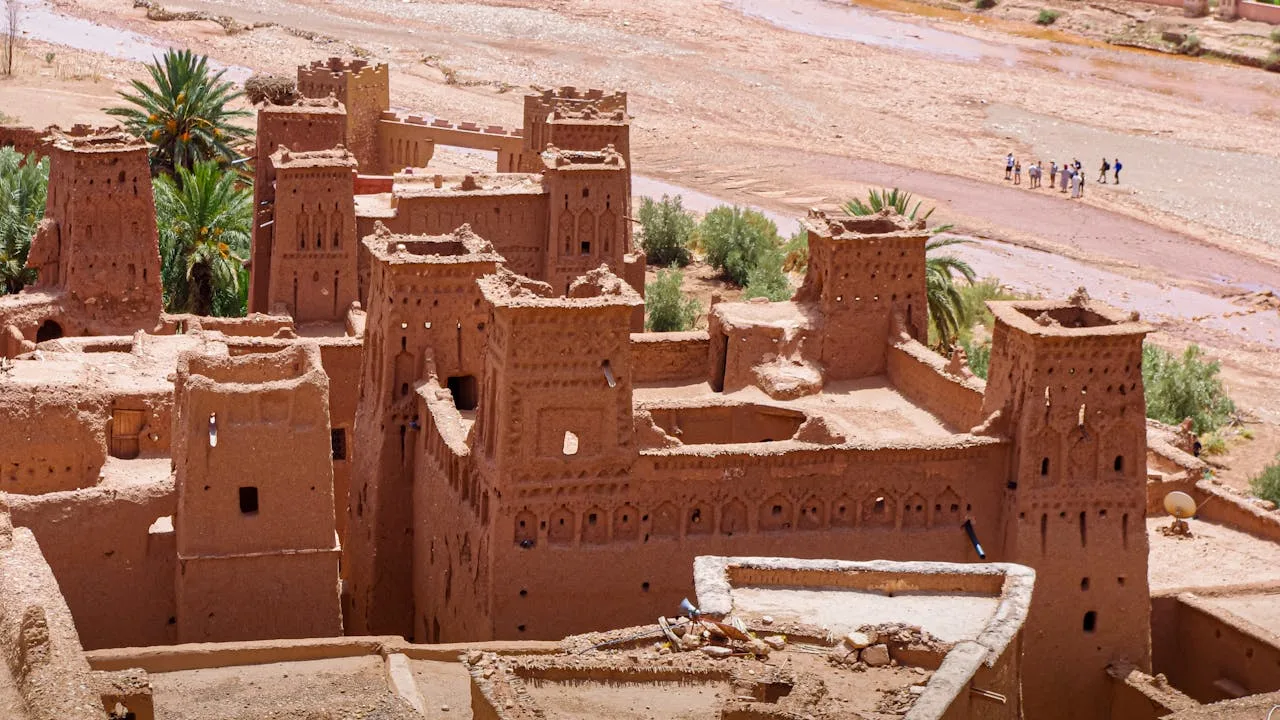
Aït Ben Haddou itself is a UNESCO World Heritage site and Morocco’s most-filmed location. Gladiator, The Mummy, Game of Thrones, Lawrence of Arabia — the list goes on. The ksar (fortified village) of earthen towers and alleyways is genuinely impressive in person, not just photogenic. A few families still live inside; the rest has been preserved as a kind of living museum. Cross the riverbed (stepping stones or a footbridge depending on season) and climb to the top granary for the best views — worth the 20-minute walk up.
Ouarzazate, 30 minutes further east, is called Morocco’s Hollywood. Atlas Corporation Studios has been operating since 1983 and you can tour it — massive props from old productions are scattered around, which is either fascinating or slightly odd depending on your mood. The Taourirt Kasbah in the town centre is well-preserved and easier to explore independently.
This is one of the few day trips where we’d genuinely suggest considering an overnight stay instead. Rushing four hours of driving each way into a single day means you get about three hours on the ground, and the road back over the pass in the dark is tiring. Our two-day Ouarzazate and desert tours cover the same ground at a pace that’s actually enjoyable.
If you’re prone to motion sickness, take medication before the Tizi n’Tichka road. The switchbacks are relentless. A private vehicle is considerably more comfortable than a tour bus on this route.
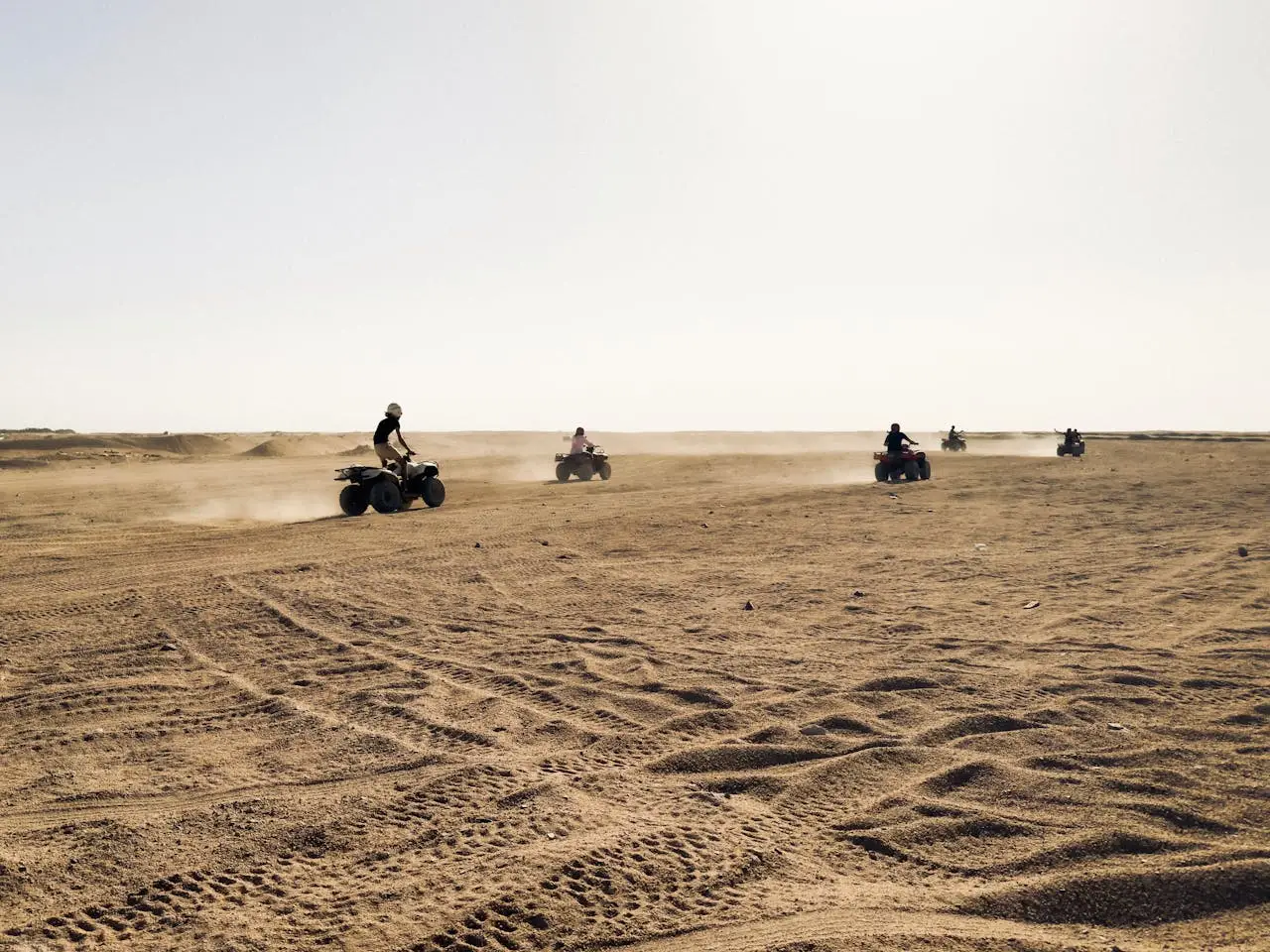
Agafay is the answer to “I don’t have time for the Sahara.” Forty minutes from Marrakech, the landscape shifts into bare limestone plateaus, rocky hills, and a horizon that feels genuinely empty. There are no sand dunes — that’s important to know going in. What you get is a moon-surface stillness with the snowy Atlas as a backdrop, which is its own kind of striking.
The most popular format is an afternoon trip: arrive around 3pm, camel ride or quad bike, sunset from a ridge, dinner in a camp with lanterns and traditional music. Some camps are basic; the luxury ones have swimming pools with desert views, which is an absurd and somehow perfect combination.
People mix these up constantly, so it’s worth being direct:
Agafay works well as a day or half-day trip. The Sahara requires a dedicated multi-day journey. They’re not interchangeable, and operators who describe Agafay as “the Sahara” are being misleading — so watch out for that in tour descriptions.
Spring visits (March–May) occasionally see wildflowers across parts of the plateau. It’s brief and unpredictable, but when it happens, the contrast is remarkable.
Ourika Valley is probably the easiest day trip from Marrakech — one hour from the city centre, no mountain passes, and a straightforward road that follows the river upstream into the foothills. It’s popular with Marrakchis on weekends for good reason: the riverside restaurants, built on platforms over the water, are excellent for a long lunch, and the valley itself is genuinely green compared to the surrounding plains.
The valley road ends at Setti Fatma, where the seven-waterfall hike begins. The first waterfall is a 30-minute walk; all seven takes 2–3 hours and involves scrambling over rocks. Local guides hang around the village entrance ($10–$15, worth it — the path isn’t always obvious). The pools at each level are cold year-round but people swim in them, especially in July and August.
The Ecomusée Berbère, a few kilometres before Setti Fatma, is a traditional Berber home that’s been opened as a small museum. It takes 30 minutes and gives real context to the architecture and domestic objects you’ll see throughout the valley. Easy to miss, worth stopping.
Avoid summer weekends — Ourika gets overwhelmed with domestic tourists on Saturday and Sunday afternoons. Weekday mornings are a completely different experience. Continue past the main tourist cluster to villages like Timalizen or Anammer if you want less foot traffic and more authentic interaction.
Several operators sell “one-day Sahara trips” from Marrakech, targeting Zagora rather than Merzouga. We’ll be straightforward: this is one of the worst-value trips you can book.
The maths don’t work. Zagora is 6–7 hours each way. Add the mandatory stops at Aït Ben Haddou and Ouarzazate for photo opportunities, and you’re looking at 10–12 hours of driving in a single day, with perhaps 90 minutes at the pre-Saharan landscape near Zagora. The “dunes” at Zagora are modest. You’ll arrive tired, have minimal time to experience anything, and return to Marrakech close to midnight.
If the Sahara is a priority, budget two nights minimum. The experience at Merzouga (Erg Chebbi) — arriving at sunset, sleeping in a desert camp, waking before dawn for the light on the dunes — is one of the best things you can do in Morocco. It just needs time. Our 3-day Sahara tours from Marrakech cover this properly.
If you genuinely only have one day and want desert, go to Agafay (see above). It’s not the Sahara, but it’s an honest experience rather than a rushed disappointment.
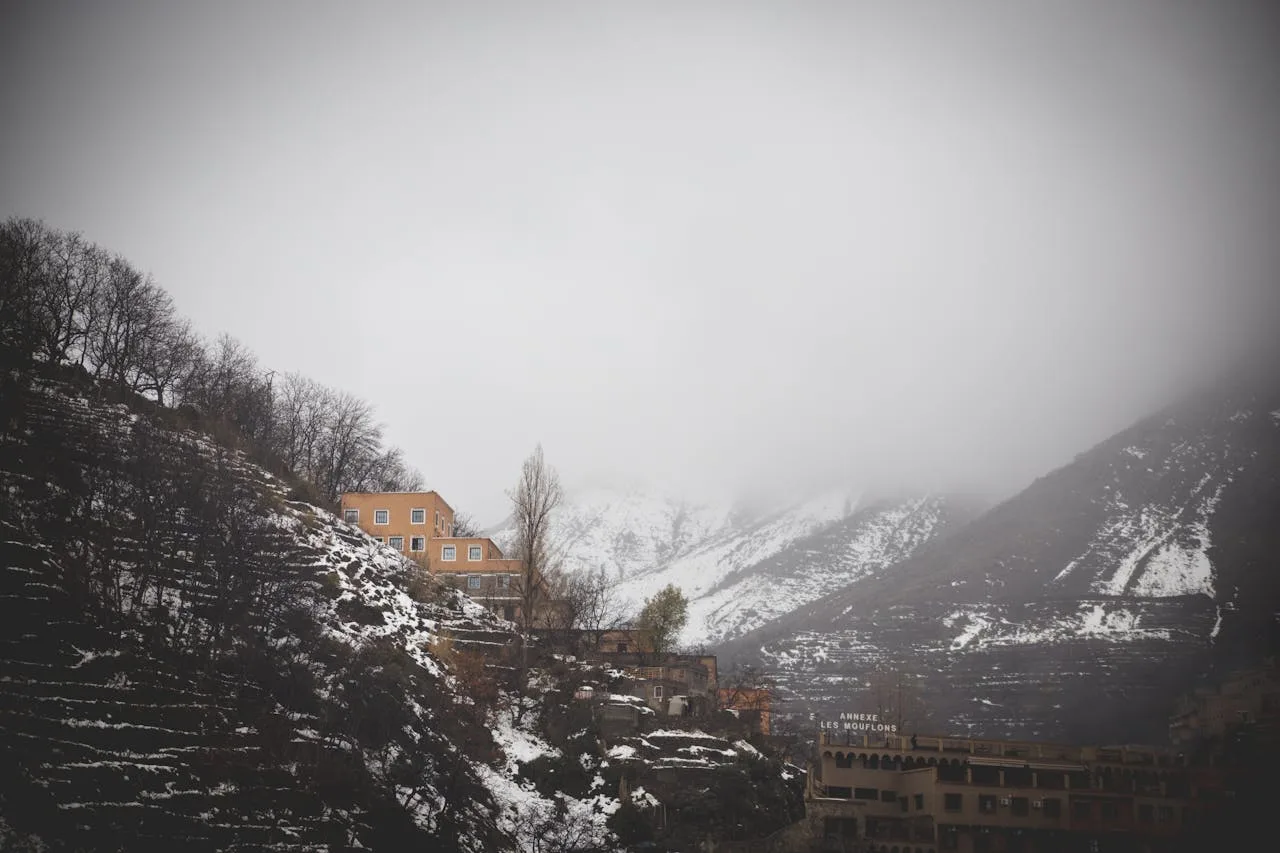
Imlil is where serious hikers go. It sits at 1,800 metres in a valley below Jebel Toubkal — at 4,167 metres, the highest peak in North Africa — and the landscape is immediately different from anything you’ll see closer to Marrakech. Stone houses rather than mud brick, terraced fields climbing the valley walls, mule paths connecting villages that have never seen a tarmac road.
You don’t need to summit Toubkal for Imlil to be worth the trip (the summit takes two days and requires basic mountaineering kit from November through May). A day trip to the surrounding villages is satisfying on its own. The walk from Imlil to Armed takes about 45 minutes through walnut groves and terraced wheat fields. Armed looks directly up at the Toubkal massif — the views are as good as anything on the summit approach.
The Kasbah du Toubkal’s rooftop terrace is open to non-guests for tea. The view from there, over the valley and up to the snowfields, is worth the walk. For anything more ambitious — Tizi Mzik pass, the Azzaden Valley, the summit itself — hire a local guide from the village. They charge fairly and genuinely know the routes.
It’s significantly colder than Marrakech — 10 to 15°C cooler, sometimes more. Pack accordingly even in summer. Proper shoes matter; the paths are rocky. For multi-day trekking, see our Atlas trekking tours.
Bin El Ouidane isn’t on most itineraries, which is most of its appeal. About an hour past Ouzoud Falls, this reservoir was built in the 1950s and has been slowly discovered by travellers looking for something less scripted. The water is the kind of bright turquoise that looks artificially coloured in photos — it isn’t. The surrounding landscape is dry and pale, which makes the colour even more striking.
The practical approach: spend the morning at Ouzoud, eat lunch at one of the base restaurants, then continue to the lake for the afternoon. A few small restaurants on the shore serve grilled fish with a view that most people in Morocco don’t know exists. Kayaks and small boats can usually be hired from the shore during summer months.
There are also natural bridges and swimming spots in the gorge below the dam — less visited and genuinely spectacular. Ask locally for directions; the path isn’t signposted.
This combination needs private transport, not a group tour. Plan for 11–13 hours total and bring supplies — the lake area has almost no tourist infrastructure.
Setti Fatma sits at the end of the Ourika Valley road, about 1.5 hours from Marrakech. The village itself is unremarkable — a string of restaurants and souvenir stalls — but the hike behind it is the reason people come. Seven waterfalls, progressively harder to reach, each with a pool at the base. The first is 30 minutes from the village. All seven requires 2–3 hours of moderate hiking with some scrambling, and the upper falls are genuinely impressive.
The water is cold year-round. People swim anyway, particularly in summer. The upper pools, less accessible to casual visitors, are quieter and cleaner.
Local guides from the village are recommended — around $10–$15 for the full hike — because the path branches and some sections are slippery after rain. The guide fees are reasonable and the income goes directly to local families. Weekdays are significantly quieter than weekends; summer Saturday afternoons here are chaos.
Proper grip shoes are not optional — the rocks near the falls are genuinely slippery. The waterfalls are most impressive in spring (March–May) after winter rains. August visits are still worthwhile but expect less water volume.
The right transport depends on where you’re going and how much flexibility matters to you.
For remote combinations like Ouzoud plus Bin El Ouidane, or any route involving off-road sections, a private driver who knows the route is worth the extra cost.
Depart Marrakech by 7–8am on any trip. It maximises time at the destination, avoids traffic leaving the city, and gets you back before the late afternoon heat in summer.
For village visits in rural areas, dress modestly — covered shoulders and knees for women, and men in shorts may attract unwanted attention in conservative communities. It’s a small adjustment that makes a real difference to how you’re received.
If you’re only doing one day trip and it’s your first time in Morocco, the Atlas Mountains or Essaouira are the safest bets. Atlas if you want mountains and culture; Essaouira if you want coast and a slower pace.
Related guides that might help:
The Atlas Mountains day trip is the most popular choice — it takes just 40 to 90 minutes to reach and gives you Berber villages, mountain scenery, and a genuine contrast to the city, all in one day. Essaouira is a close second if you want coast and fresh seafood instead.
Technically yes, if you target the Zagora area — but it means roughly 12 hours of driving and barely 90 minutes on the ground. We don’t recommend it. For the orange sand dunes most people picture, you need at least two nights. The Agafay Desert is a far better one-day desert fix, only 40 minutes from Marrakech.
Shared group tours to popular spots like the Atlas Mountains or Essaouira typically run $60–$90 per person. A private driver costs $100–$200 depending on distance. If you’re flexible with time, public buses to Essaouira cost around $8–$10 each way.
For spring and autumn travel — Morocco’s busy seasons — book 1–2 days ahead, especially for private tours. Your riad can usually arrange the same options as street agencies, often more reliably. Last-minute bookings in low season are almost always fine.
Ourika Valley works well for families — the drive is short (one hour), there are riverside restaurants where kids can roam, and the waterfall hike is optional. Agafay Desert is another solid pick: camel rides are short and easy, and the drive is only 40 minutes.
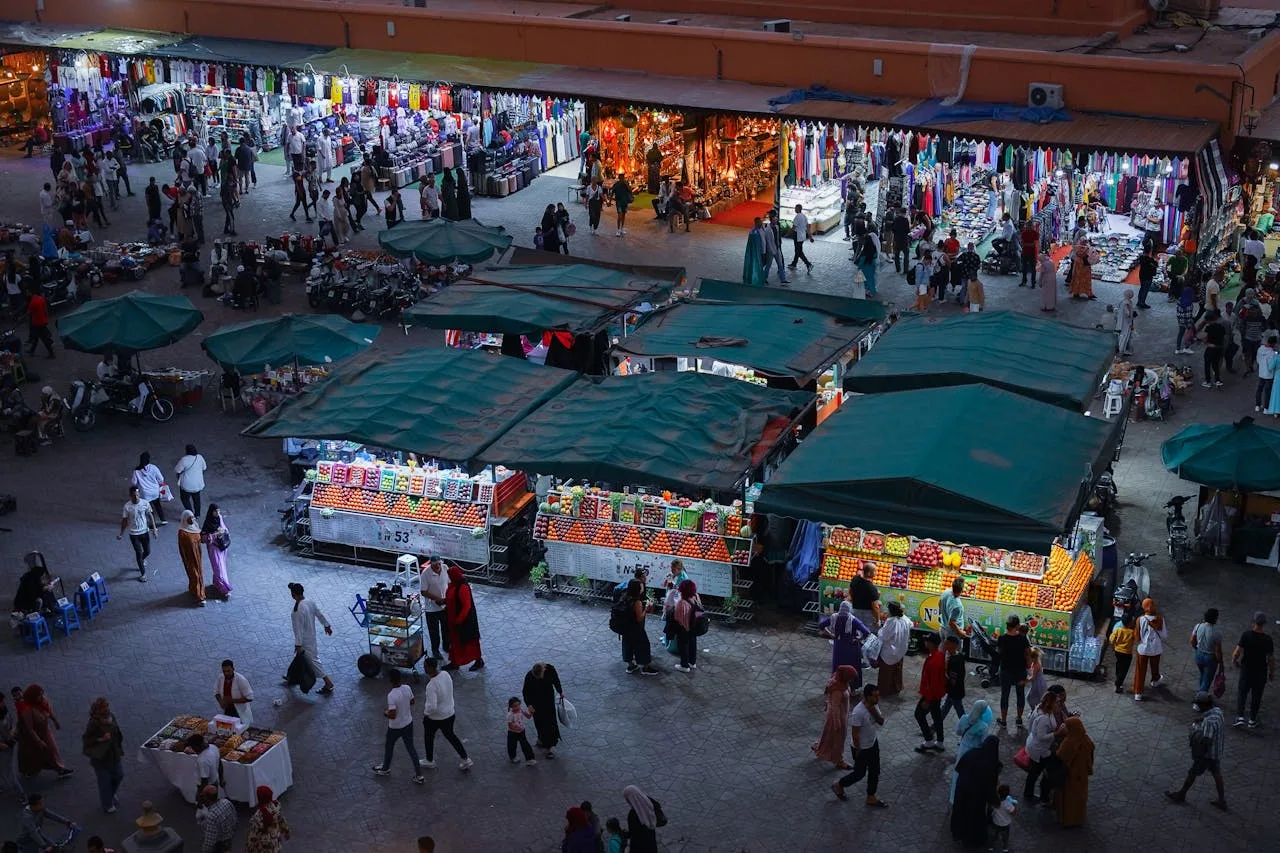
[ez-toc] The Ultimate Marrakech Nightlife Guide: Where to Experience the Magic After Dark Marrakech transforms as the sun sets, revealing a vibrant nightlife scene that...
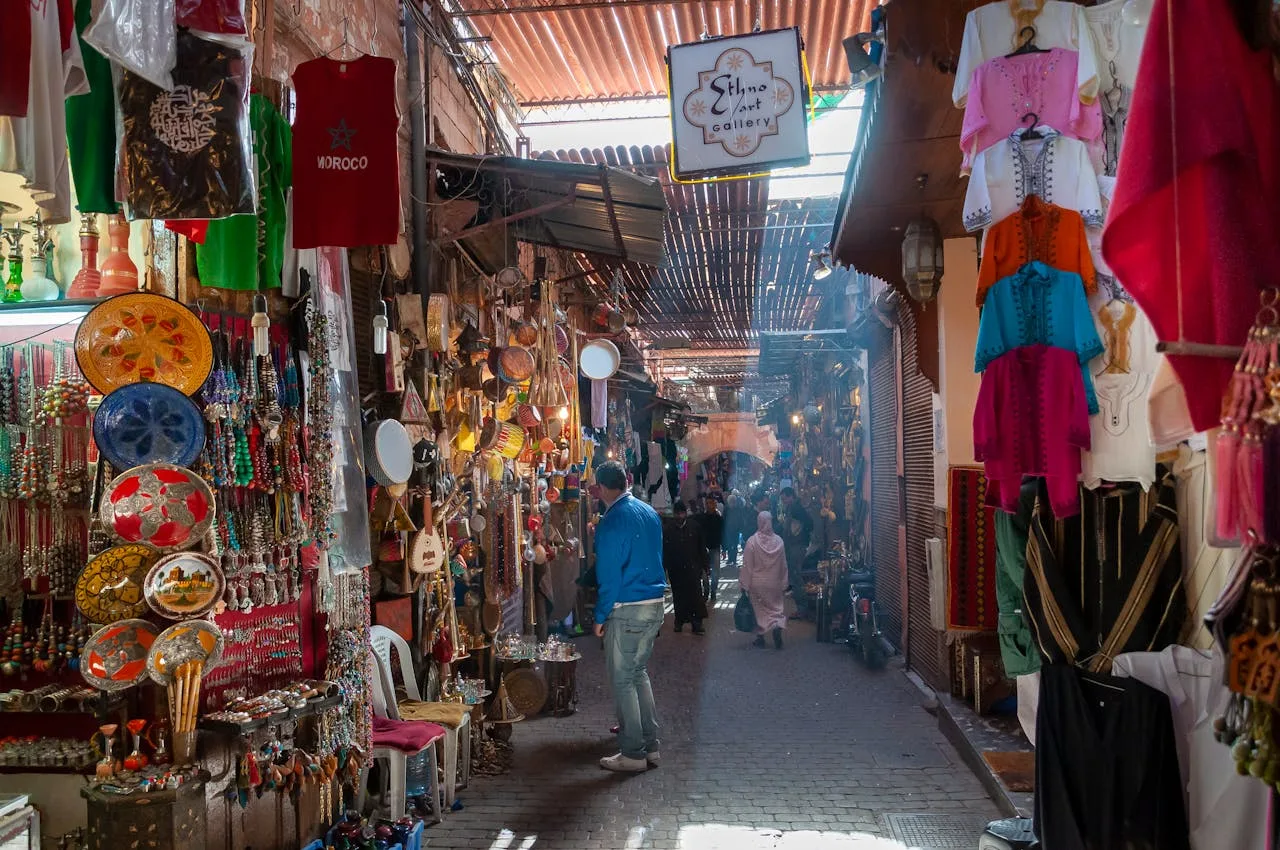
Marrakech Medina Walking Guide: Navigating the Ancient Walled City Stepping into Marrakech's ancient Medina is like entering a living museum where centuries-old traditions thrive alongside...
Discovering Marrakech doesn't have to drain your wallet. The vibrant Red City offers countless ways to immerse yourself in Moroccan culture without spending a single dirham.
