Chefchaouen Travel Guide: Morocco’s Blue City (2026)
[ez-toc] Part of: The Complete Morocco Travel Guide Chefchaouen Travel Guide: Morocco's Blue City Tucked into the folds of the Rif Mountains, Chefchaouen is unlike...
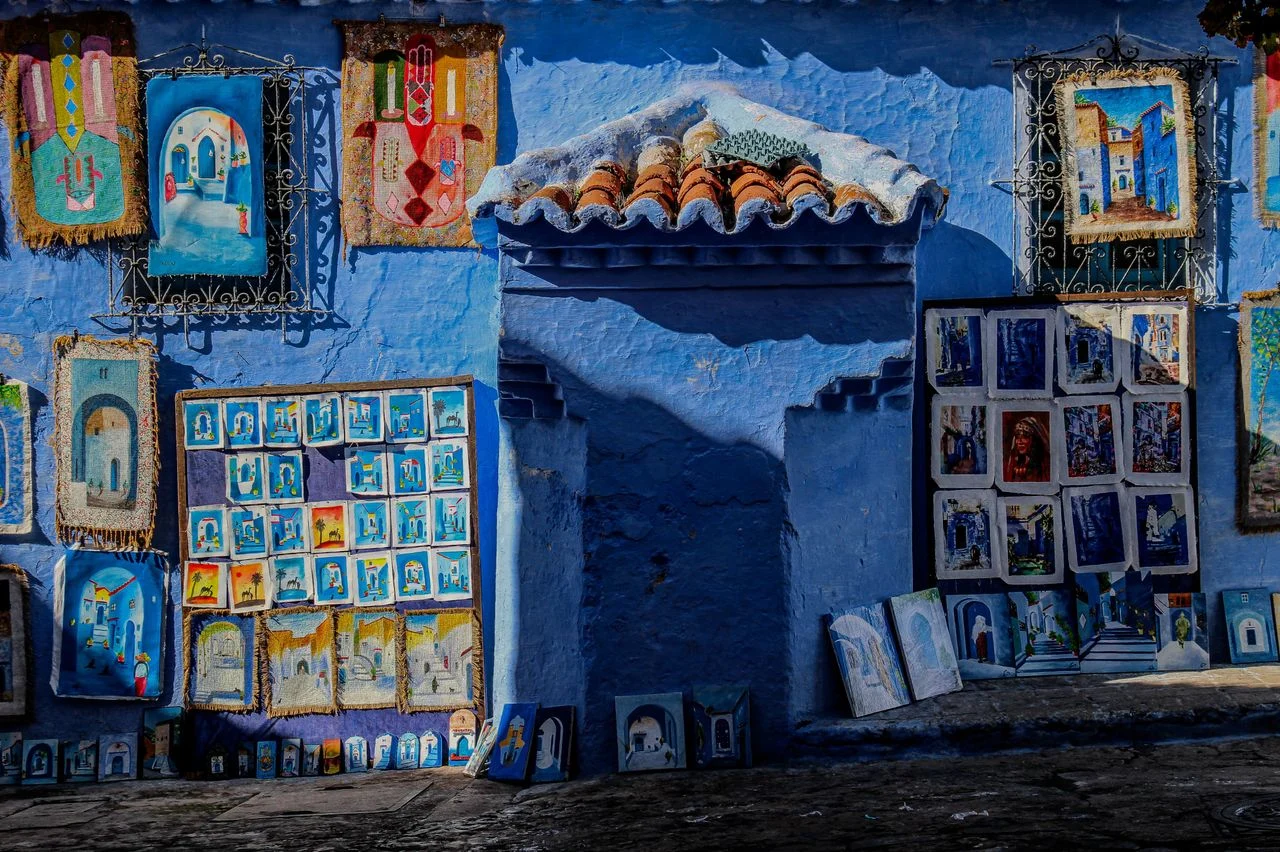
There’s a certain kind of traveler who arrives in Chefchaouen skeptical. They’ve seen the photographs the endless blue walls, the flower pots, the cats sleeping on cobblestones and decided the place is probably a stage set. An Instagram backdrop dressed as a city.
Then they spend about forty minutes walking through the medina and the skepticism dissolves.
What the photographs can’t capture is the texture of the place: the way the blue shifts from powder to cobalt to indigo depending on the hour and the wall’s age and what the light is doing. The sound of water running through the stone channels in the streets. The smell of cumin and cedar and bread baking somewhere you can’t quite locate. Chefchaouen is absolutely as beautiful as advertised. It’s also more complex, more layered, and more genuinely alive than the photographs suggest.
Here are fifteen places that explain why.
Before exploring these 15 incredible places, make sure you’ve read our complete guide to Morocco’s Blue Pearl. It covers everything you need to know about Chefchaouen, including where to stay, how to get there, the best time to visit, local tips, and practical advice for planning your trip.
Read our complete Chefchaouen Travel Guide:
Every visit begins here, whether you plan it that way or not. The main square is the gravitational center of the medina wide and unhurried, framed by the red-brown walls of the kasbah on one side and a row of café terraces on the other. The old mosque at the far end has an unusual octagonal minaret, a detail that surprises people expecting the square towers common throughout Morocco.
Come in the early morning when the square belongs mostly to pigeons and old men drinking coffee. Come again at dusk when families circle the perimeter and children run in loose orbits around their parents. Come at night when the café lights string across the terrace and the sound of conversation and occasional music fills the whole space. The square looks different at every hour and rewards being visited at all of them.
Photography tip: The mosque’s minaret photographs best in the late afternoon when the light hits its terracotta-toned plasterwork from the west.
The kasbah itself is worth entering even if you’re the kind of traveler who usually walks past museums. The building a 15th-century fortress with thick earthen walls and a shaded interior garden of citrus trees and fountains has a stillness that the surrounding streets don’t. The collection inside covers the city’s history from its Andalusian founding through the colonial period, with objects ranging from weapons and manuscripts to traditional textiles and musical instruments.
The real reward, though, is the tower. Climb it and you’re looking over the blue medina rooftops toward the mountains on three sides, close enough to see the swallows nesting in the walls below you. Thirty dirhams admission. Arrive before ten in the morning before the tour groups fill the courtyard.
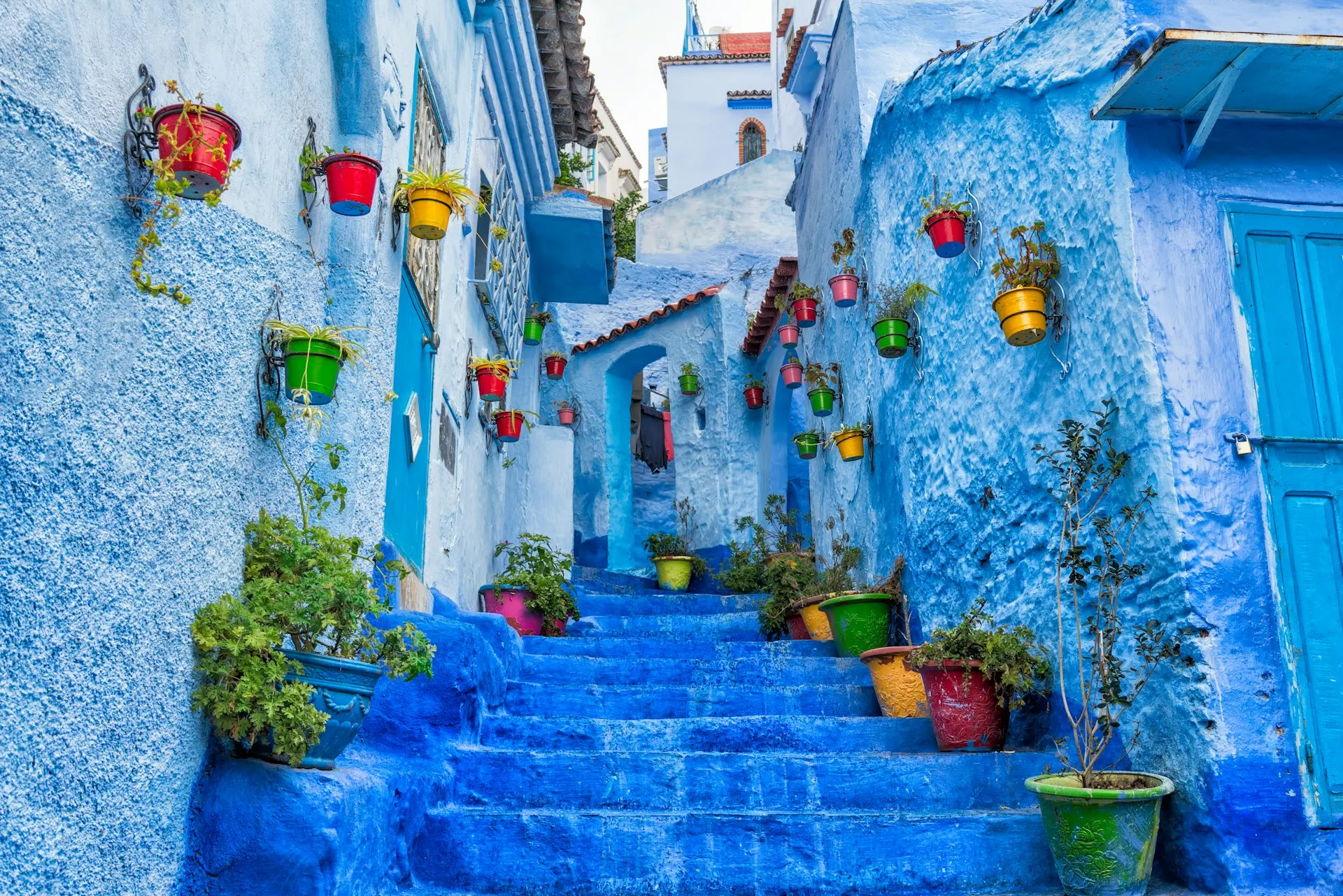
Named for the Andalusian refugees who settled this quarter five centuries ago, Rue Al Andalus is the photographic heart of Chefchaouen the lane whose stacked flower pots, blue-painted steps, and layered textures appear in roughly seventy percent of all photographs taken in the city.
It earns the attention. The street climbs steeply through the upper medina, its walls painted in gradations of blue that shift almost imperceptibly from house to house: sky blue, cornflower, deep cobalt, grey-blue, and back again. The residents who maintain these walls and flower pots are not doing it for tourists. They’ve been doing it for generations. That continuity shows.
Go before eight in the morning. The light is softer, the lane is quieter, and you’ll be able to stand still for more than fifteen seconds without someone walking into your frame.
A ten-minute walk from the main square, through the medina’s eastern gate, brings you to something that feels entirely incongruous with a mountain city: a legitimate waterfall, the Ras el-Maa, rushing over a wide rocky shelf at the edge of town. Women have done laundry in these channels for centuries you’ll often see them there still, wringing cloth in the cold, fast water with a matter-of-fact efficiency that makes the whole scene feel unperformed.
Children wade in the shallows in summer. Local families spread blankets on the grassy banks on Friday afternoons. There are a few tea stalls nearby that do a reasonable business on warm days. The whole area has the atmosphere of a neighborhood park rather than a tourist attraction, which is exactly why it’s worth your time.
Getting here: Walk through the main medina gate (Bab el-Ain), turn left along the outside of the wall, and follow the sound of the water.
The Spaniards built this mosque in the 1920s during the colonial period and used it, briefly, before independence made such arrangements complicated. It’s been empty since then no active congregation, no regular visitors, just a white cube sitting on a hillside above the city with one of the best views in northern Morocco.
The hike up takes about twenty minutes from the medina on a clear path through the scrub and cedar. Go at sunrise if you can manage it. The city below is still dark, the mountains are just beginning to catch light, and you’ll have the hilltop almost entirely to yourself. By nine in the morning, the first tour groups start arriving. By noon it’s crowded. The window between 6am and 8am is worth setting an alarm for.
Practical note: The mosque itself is not open to non-Muslims. The view from outside is the reason to come.
People speak of Chefchaouen’s blue streets as if they’re a single thing, but the lower medina the older, denser section below the kasbah has a completely different character from the upper tourist lanes. The passages here are narrower, darker, less decorated. Elderly women sit in doorways doing embroidery. A man repairs sandals on a low stool. A donkey, heavily loaded, makes a turn with practiced ease through a gap that looks too narrow for it.
The blue here is more faded, more layered twenty years of whitewash and pigment applied in uneven coats, with the older colors showing through in patches. It’s less photogenic by conventional standards and far more interesting.
Getting lost here is not a problem. The medina is small enough that you can’t get genuinely lost eventually every passage leads back to a known landmark. Getting slightly lost, on the other hand, is how you find the best things.
The stretch of lanes running north from the kasbah toward the Bab el-Ain gate is where the city’s traditional craft production happens and has happened for centuries. Weavers work on upright looms in open workshops, their shuttles moving in the rapid lateral rhythm you can hear from the street before you see them. Leather goods are tooled by hand. Wool blankets in geometric Berber patterns hang from every available surface.
The quality here is genuinely variable. Some of what’s sold is locally made; some of it arrived on a truck from Fes or Casablanca. The way to tell the difference is to ask, watch for hesitation in the answer, and pay attention to where the workshops are in relation to what’s being sold. A weaver selling directly from his workshop is usually the real thing.
The wool jellabas (hooded robes) in undyed natural grey and brown are particularly good here. Practical, well-made, and not available in quite the same quality everywhere else.
There’s a time in every Chefchaouen day usually mid-afternoon, when the heat or the walking has caught up with you when you need to sit down, stop moving, and drink something slowly. Café Lala Khadija, on the edge of the main square, is where to do that.
Mint tea here is made the correct way: fresh spearmint stuffed into a small metal teapot with Chinese gunpowder green tea and more sugar than you’d think necessary. It’s poured from a height to create froth, then poured back into the pot, then out again, until the pour is declared right by whoever is making it. The whole process takes several minutes. That’s not inefficiency it’s the point.
Order the amlou alongside the tea and clear your afternoon and if you’re wondering where else to eat, check out our guide to the best restaurants in Chefchaouen for a full local dining itinerary.
Fewer visitors know about the small traditional tannery on the northeastern edge of the medina than about its famous counterpart in Fes, which is part of why it’s worth seeking out. The vats here filled with natural dyes in terracotta, saffron yellow, and deep olive green are worked by the same family that’s run them for three generations. The smell is distinctive (a polite way to describe it), but the vantage point from the terrace of the neighboring leather shop, usually offered for free if you make even a minimal purchase, puts you directly over the works.
It’s a smaller operation than Fes and easier to visit without the aggressive guiding that can make the northern tanneries stressful. Come in the morning when the colors are freshest and the workers are most active.
One of the underappreciated things to do in Chefchaouen is simply walk beyond it. A marked trail leads from the northern edge of the medina through cedar and oak forest toward the Ain Tissimane spring, about an hour’s hike at a relaxed pace. The path climbs steadily, offering progressively more dramatic views of the city below getting smaller against the mountain backdrop.
The spring itself is cold, clean, and shaded by trees old enough that they were probably here when the city was founded. Local hikers fill bottles here. In late spring, wild lavender and thyme line the path and the whole hillside smells herbal and dry.
You don’t need a guide for this trail. Comfortable shoes and a full water bottle are sufficient. The path is marked with painted stones at the main junctions.
Every medina has a section the tourists skip. In Chefchaouen, it’s Souika the northern quarter, beyond the main souk lanes, where the houses are older and less maintained and the streets narrow to the point where you occasionally have to turn sideways. The blue walls here haven’t been freshened recently. There’s laundry strung between buildings and televisions audible through shuttered windows.
It’s the most ordinary part of the city, which makes it the most real. Children play football in a small open space between houses. A pharmacy shares a wall with a traditional herbalist’s shop. An old man reads a newspaper on a chair he’s carried into the alley to catch the afternoon sun.
Spending an hour here recalibrates your sense of what Chefchaouen actually is: not a heritage museum or a backdrop, but a city where people live.
The original city walls mostly intact and walkable in sections trace the medina’s perimeter and offer a different orientation to the city than the interior lanes provide. The eastern ramparts, above Ras el-Maa, are the most accessible and the most dramatic, looking out toward the mountains with the city compressed below you.
Walk the walls in the early morning when the light comes in from the east and the city is still waking up. The azan (call to prayer) echoes against the stone in a way that’s genuinely affecting even for secular visitors. Bring a camera but also just stand there for a while.
Before the founding of Israel in 1948 and the subsequent migration of much of Morocco’s Jewish population, Chefchaouen had a significant Jewish community. Jewish refugees from Iberia were among the city’s original founders, and the mellah their traditional quarter still exists in the streets east of the kasbah, its star-of-David decorations faded but still visible on some doorway lintels.
The neighborhood is residential and quiet. There’s no formal tourist infrastructure, no interpretive signs, no preserved synagogue open to visitors. What there is is a texture of absence a place where a community once thrived that now requires some imagination to see. For travelers interested in the layered history of Morocco’s Sephardic Jews, this quarter is quietly significant.
On Sunday mornings, a flea market sets up outside the medina walls near Bab el-Ain an unpredictable collection of second-hand clothing, old household items, tools, and occasionally genuine antiques mixed in with the usual flea-market detritus. Local buyers pick through piles of fabric and old teapots. A man sells vintage Moroccan newspapers from a folding table.
This is not a curated shopping experience. It’s better than that. The prices are low, the atmosphere is unperformed, and the occasional find an old copper coffee pot, a hand-painted tile, a wool blanket from the ’70s makes the hunt worthwhile. Arrive early. By ten in the morning, the best things are gone.
This one can’t be booked through a tour operator, but it’s the most reliable experience in the whole city: finding a spot high enough to watch the light leave Chefchaouen.
As the sun drops behind the Rif peaks, the blue walls shift from their daytime brightness to something warmer and more complicated lilac, grey-blue, dusty indigo. The calls to prayer overlap and fade. Swallows circle in the last thermals. Somewhere below, someone is making dinner and the smell drifts upward.
Stay in a riad or guesthouse with a rooftop specifically for this. It costs nothing extra. It’s available every evening. And it’s the image of Chefchaouen that doesn’t circulate on social media because it’s too slow and atmospheric to translate into a still photograph.
Some places work best when you’re just standing in them, looking.
The medina is small enough to walk entirely in under an hour if you go in a straight line, which you won’t. Budget at least two full days to see it without rushing. Three is better.
The city’s two main entry points are Bab el-Ain (the lower gate, closest to the bus station and main parking) and the upper lanes near the kasbah. Most guesthouses will meet you at the gate with directions or a short guide to your accommodation, since vehicles can’t enter the medina.
Photography is widely accepted, but pointing a camera directly at people without asking first is considered rude. A shukran (thank you) and a genuine smile go a long way. The women washing laundry at Ras el-Maa are not decorative features of the landscape treat them accordingly.
Finally: the city’s famous blue paint is not a fixed, uniform thing. Different families maintain their walls differently, and the shades change street by street and year by year. The blue you see when you arrive will not be exactly the same blue you see in photographs taken five years ago. That’s not a disappointment it’s evidence of a living city, still deciding what it wants to look like.
Most guesthouses are fully booked in summer and spring weekends knowing the best time to visit Chefchaouen in advance will help you plan and reserve ahead.
Chefchaouen is most famous for its blue-painted medina walls, steps, and doorways in every shade from powder blue to deep cobalt. But beyond the colour, it’s known for its relaxed atmosphere, Andalusian-influenced architecture, mountain setting in the Rif, and traditional crafts particularly wool weaving and leather goods.
Two full days is the minimum to see the main places without rushing. Three days is ideal it gives you time to explore the medina at different hours, hike to the Spanish Mosque at sunrise, walk the trail to Ain Tissimane, and still spend an afternoon sitting in a café doing nothing in particular. More than four days and you’ll start to feel the city’s smallness.
Yes and not just for the photographs. The medina is genuinely beautiful and more complex than social media suggests. The surrounding mountains offer serious hiking. The food is good, the guesthouses are excellent value, and the pace of life is slower than anywhere else in northern Morocco. Most visitors who arrive skeptical leave wanting to come back.
March to May and September to November are the best months. Spring brings wildflowers on the mountain trails and comfortable temperatures. Autumn has clear light and fewer crowds than summer. July and August are the busiest months the city fills with Moroccan families on holiday and European tourists simultaneously. December to February can be cold and occasionally wet but the medina is at its quietest.
Yes, easily. The medina is small enough that getting genuinely lost is nearly impossible every passage eventually leads back to a known landmark. A basic offline map helps with orientation on your first day. You don’t need a guide for any of the main sites, though a local guide adds context for the tanneries, the mellah, and the surrounding hiking trails.
The wool jellabas in natural undyed grey and brown are the best local purchase better quality here than in Fes or Marrakech and made by weavers you can actually watch working. Hand-woven blankets in geometric Berber patterns are also worth buying directly from workshop weavers in the artisan quarter. Avoid anything that looks like it could have come from a Marrakech souk it probably did.
[ez-toc] Part of: The Complete Morocco Travel Guide Chefchaouen Travel Guide: Morocco's Blue City Tucked into the folds of the Rif Mountains, Chefchaouen is unlike...
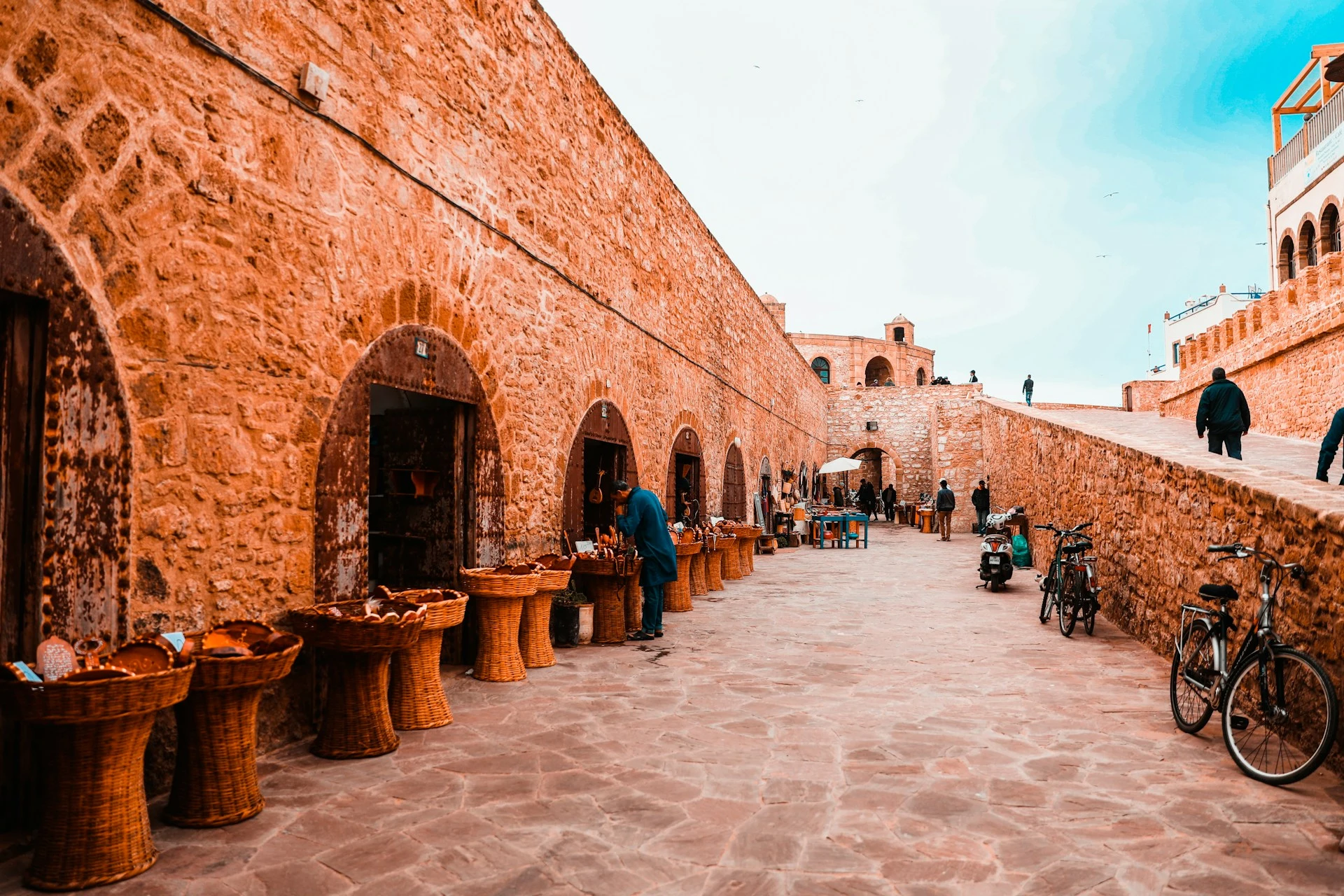
[ez-toc] 📍 Part of: The Complete Morocco Travel Guide Essaouira Travel Guide: Morocco's Laid-Back Atlantic Town After the intensity of Marrakech, Essaouira feels like exhaling....
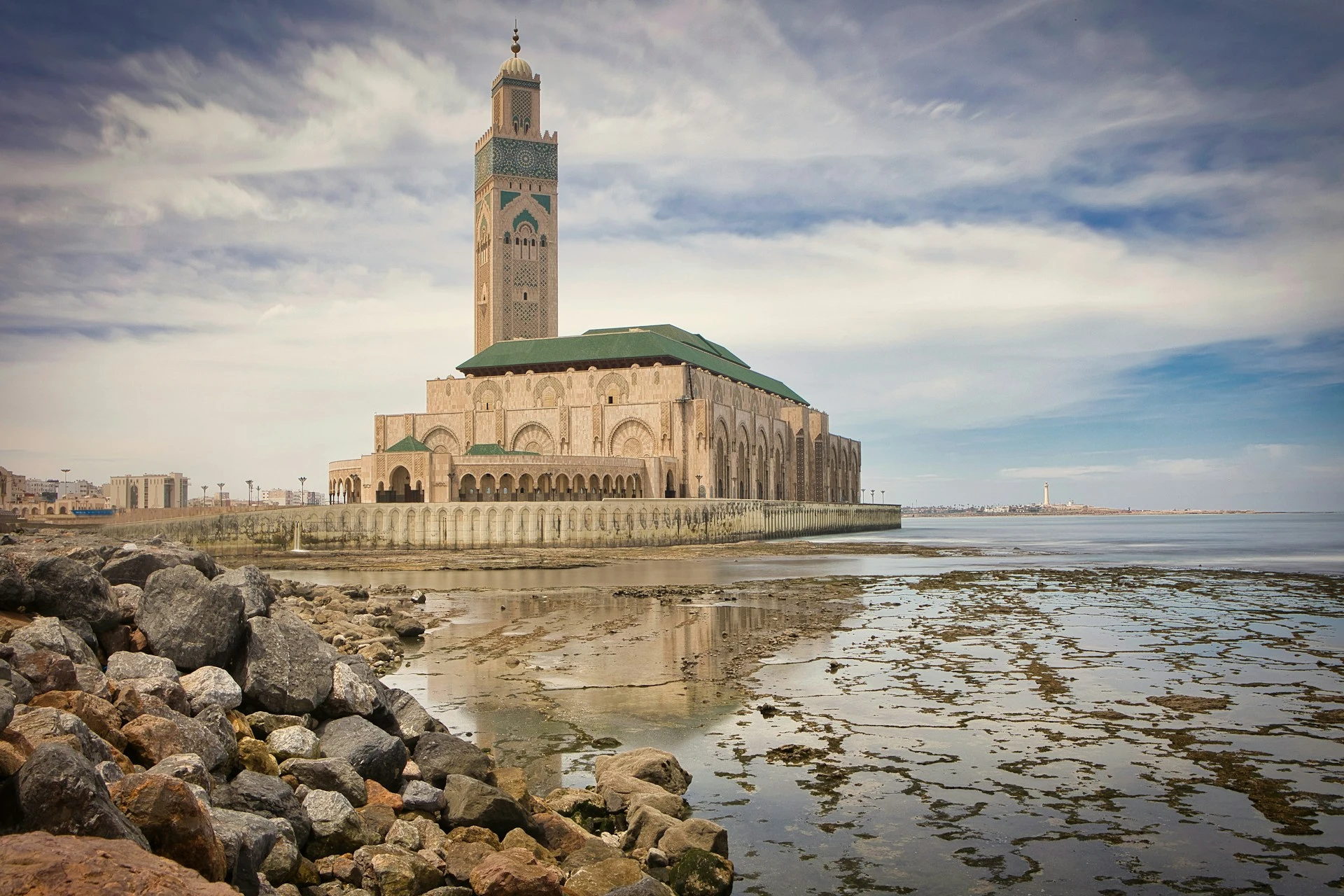
[ez-toc] Part of: The Complete Morocco Travel Guide Casablanca Travel Guide: Morocco's Modern Face Casablanca isn't the Morocco of postcards and ancient medinas and that's...
