Chefchaouen Travel Guide: Morocco’s Blue City (2026)
[ez-toc] Part of: The Complete Morocco Travel Guide Chefchaouen Travel Guide: Morocco's Blue City Tucked into the folds of the Rif Mountains, Chefchaouen is unlike...
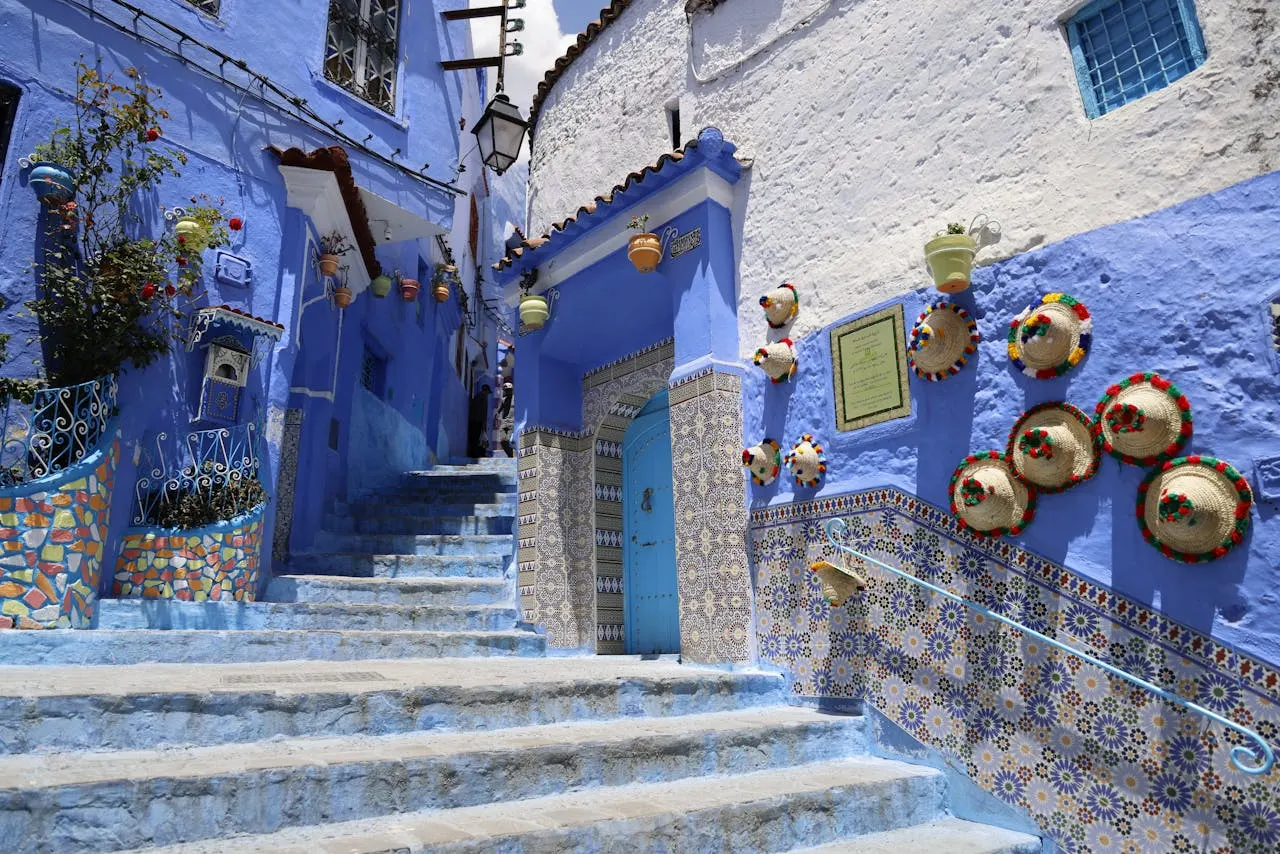
There’s a moment, usually around seven in the morning, when the light in Chefchaouen does something almost unreasonable. It slants through the narrow passages of the medina and hits the indigo-washed walls at an angle that makes everything glow—not golden, the way people describe European cities at sunrise, but something cooler, more ethereal. The cats are still asleep on doorsteps. A man passes with a cart of bread. The whole place smells faintly of cedar and woodsmoke. You stand there and think: nobody warned me it would be this good.
That feeling is available year-round, but when you experience it—and how comfortable you are experiencing it—depends enormously on when you go. I’ve visited Chefchaouen in different seasons, talked to local shopkeepers who’ve watched travelers arrive in every month of the year, and eaten enough harira at too many hours of the day to have opinions. Here’s what actually matters.
 Read our complete Chefchaouen Travel Guide:
Chefchaouen sits in the Rif Mountains, about 1,600 feet above sea level, tucked between two peaks that local Berbers call the “goat’s horns.” That geography is the whole story. The mountains keep the city cooler than coastal Morocco in summer and considerably wetter in winter. They also create the theatrical fog that sometimes rolls through in the mornings—the kind that softens the already-dreamlike streetscapes into something almost watercolor.
Most online guides will tell you to visit in spring or fall. That’s true, but it’s also incomplete. Each season here has a distinct character, and the right choice depends on what kind of traveler you are, not just what month happens to suit your schedule.
If you can make it in April, do. The almond trees in the surrounding hills are flowering, the daytime temperature sits comfortably around 65–72°F (18–22°C), and the light—that famous blue-amplifying, soft northern light of the Rif—is at its most flattering. Photographers who know this place plan their trips around April specifically for that quality of light.
The medina in spring feels alive without feeling overcrowded. The tourist numbers haven’t hit their summer peak, which means the lane between Plaza Uta el-Hammam and the kasbah doesn’t become a slow-moving parade of selfie sticks. You can actually browse the wool blankets and hand-painted pottery in the souks without someone bumping your elbow.
Mornings are cool enough that you’ll want a light jacket for the walk to the Ras el-Maa waterfall, a local spot at the edge of the medina where women traditionally do laundry in the rushing water and children wade in the shallow pools. By afternoon, you’re comfortable in a t-shirt. Evenings cool off again, which makes the outdoor restaurants around the central square genuinely pleasant—you can sit with a pot of mint tea and a plate of msemen (flaky Moroccan flatbread) well past nine o’clock.
May is slightly busier than March or April but still manageable. Spanish day-trippers from Tarifa—just a 45-minute ferry from Tangier—start appearing more on weekends. If you’re sensitive to crowds, aim for mid-week.
The conventional wisdom says to skip summer in Morocco. In Marrakech or Fes, that advice is correct—the heat in those cities can be genuinely oppressive. Chefchaouen is different.
Because of the altitude, July highs rarely top 85°F (29°C), and the evenings are almost always cool. I spent a week here one August and found the city perfectly livable, even pleasant in the mornings. What you’re trading off is not heat but company: summer brings the highest volume of tourists, including many Moroccan families on summer holidays, which gives the city a bustling, celebratory energy that some people love and others find exhausting.
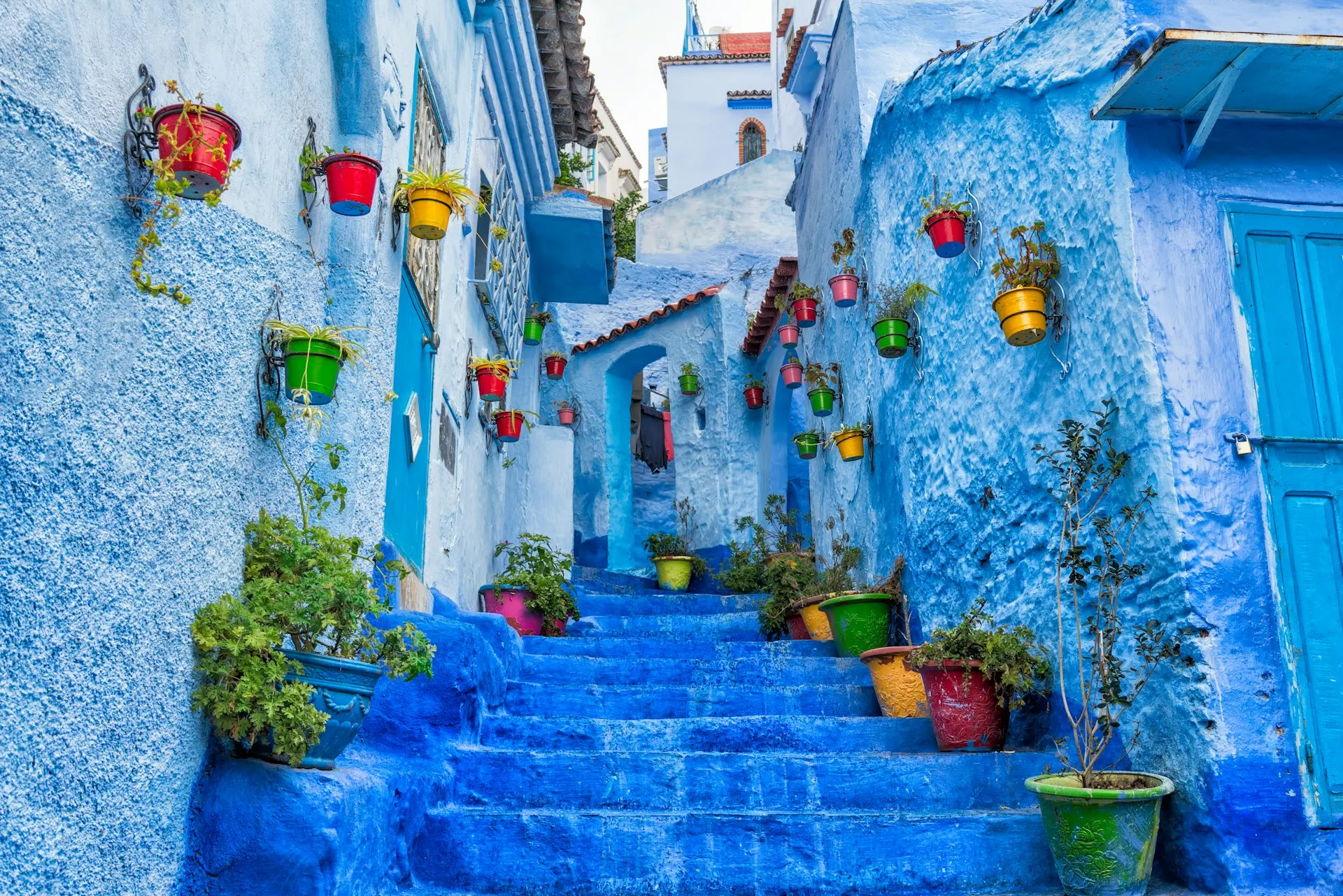
The most photographed spots—the blue stairways near the main mosque, the flower pots cascading down the whitewashed walls of Rue Al Andalus—get genuinely busy between 10am and 3pm. Go before eight in the morning or after six in the evening and you’ll mostly have them to yourself. This is not a small thing. The difference between those places at 7am and 11am is the difference between a private meditation and a rock concert.
Accommodations fill up fast in July and August. Book at least six to eight weeks ahead, especially if you want one of the smaller riads in the medina proper. The ones with rooftop terraces overlooking the blue rooftops go first.
September and October are my personal preference. The summer crowds have thinned but the weather hasn’t turned yet—days are warm and settled, typically in the mid-70s°F (around 23–25°C), and the light has shifted from the bright white of summer to something richer and more amber. The hills around the city begin changing color by late October, which adds a visual texture that complements the blue walls in a way that photographs can’t quite capture.
There’s also a practical advantage: prices. Guesthouses that were booked solid in August often drop their rates noticeably in September. The same room at a restored riad that cost 800 dirhams in peak summer might run 550 or 600 in early October.
November is genuinely uncertain. Some years it stays dry and mild well into the month; in others, the autumn rains arrive early and with conviction. The Rif Mountains can receive significant rainfall, and while Chefchaouen doesn’t flood, the cobblestones get slippery and some of the mountain walks become muddy and harder to navigate. If you’re considering November, build flexibility into your itinerary and pack waterproof shoes regardless.
Winter is for people who don’t need warmth to feel like they’re traveling properly.
January temperatures can drop to near freezing overnight, and the city receives periodic snow—not annually, but enough times per decade that it’s part of the local imagination. I’ve seen photographs of the blue medina dusted in white and they look like something from a fable. If you happen to be there when it snows, that’s a memory you’ll have for a long time.
The practical reality is that many of the smaller guesthouses and restaurants close for part of December and January, particularly after the New Year. The medina shrinks—fewer vendors, shorter hours, quieter streets. For some travelers, that’s the appeal. For others, it defeats the purpose.
The place belongs to you in a way it doesn’t in other seasons. The craftsmen who make djellabas (the traditional hooded robes) and hand-embroidered textiles have time to talk. You can sit in a café on the main square and have an actual conversation with the owner rather than a transactional exchange. The guesthouse breakfasts are more generous, the welcomes more genuine.
Visibility in the mountains can be extraordinary on clear winter days—the Rif stretches out in every direction, and the hike to the Spanish mosque above the medina is worth it for the view alone.
Most visitors spend one or two nights in Chefchaouen as part of a broader Morocco itinerary, sandwiched between Tangier and Fes. That’s enough to see the main streets and eat the kefta and feel like you’ve done it. But the city rewards staying longer. Three or four days lets you slow down, walk to the waterfall multiple times, find a café you like, wander into neighborhoods beyond the tourist circuit. The area around the kasbah museum and the older sections south of the main square feel like a different, quieter Chefchaouen.
The easiest approach from Europe is flying into Tangier Ibn Battouta Airport, then taking a bus or shared taxi (about 3 hours). CTM buses are reliable and comfortable. From Fes, the journey takes around 4 hours by bus. There’s no train station in Chefchaouen.
Stay inside or on the edges of the medina. The experience of sleeping in the blue city is meaningfully different from staying in a modern hotel on the outskirts. Riads and small guesthouses along the upper streets tend to be quieter; those near the main square are livelier and better for solo travelers who want to meet people.
The Rif region has its own culinary identity, separate from the tagines and couscous you’ll find everywhere in Morocco. Look for rfissa (a dish of chicken, lentils, and fenugreek over shredded flatbread), fresh goat cheese sold at the morning market near the main gate, and the local cannabis-infused majoun (a sweet confection, sold openly and consumed in limited quantities by plenty of locals). Kif—cannabis cultivation—is traditional in the Rif Mountains, and while possession carries legal risk, the cultural presence of it flavors the region in ways that extend beyond the plant itself.
Chefchaouen is often packaged as a photo destination—the blue walls, the cat-filled alleys, the cascading flower pots—and the photographs are all accurate. But that framing undersells what the place actually is: a working Berber and Andalusian city with a history going back to 1471, founded as a refuge for Muslims expelled from Spain. The blue walls you’re photographing became blue sometime in the 20th century, possibly brought by Jewish residents who settled here in the 1930s, or possibly adopted more gradually over time for reasons that are still debated. The residents will tell you different stories.
The best time to visit Chefchaouen is when you can stay long enough to notice that the city has its own logic, its own pace, its own internal life. April and October make that easier—the weather cooperates, the light is excellent, and the crowds give you enough room to actually see the place. But the truth is that any season in Chefchaouen, visited with curiosity and enough time, tends to deliver the same result: you leave wishing you’d booked more nights.
Getting there: Buses from Tangier (3 hrs) and Fes (4 hrs) with CTM. No direct trains. Best accommodations book 4–8 weeks ahead for spring and summer.
For more guides about Chefchaouen, visit our
[ez-toc] Part of: The Complete Morocco Travel Guide Chefchaouen Travel Guide: Morocco's Blue City Tucked into the folds of the Rif Mountains, Chefchaouen is unlike...
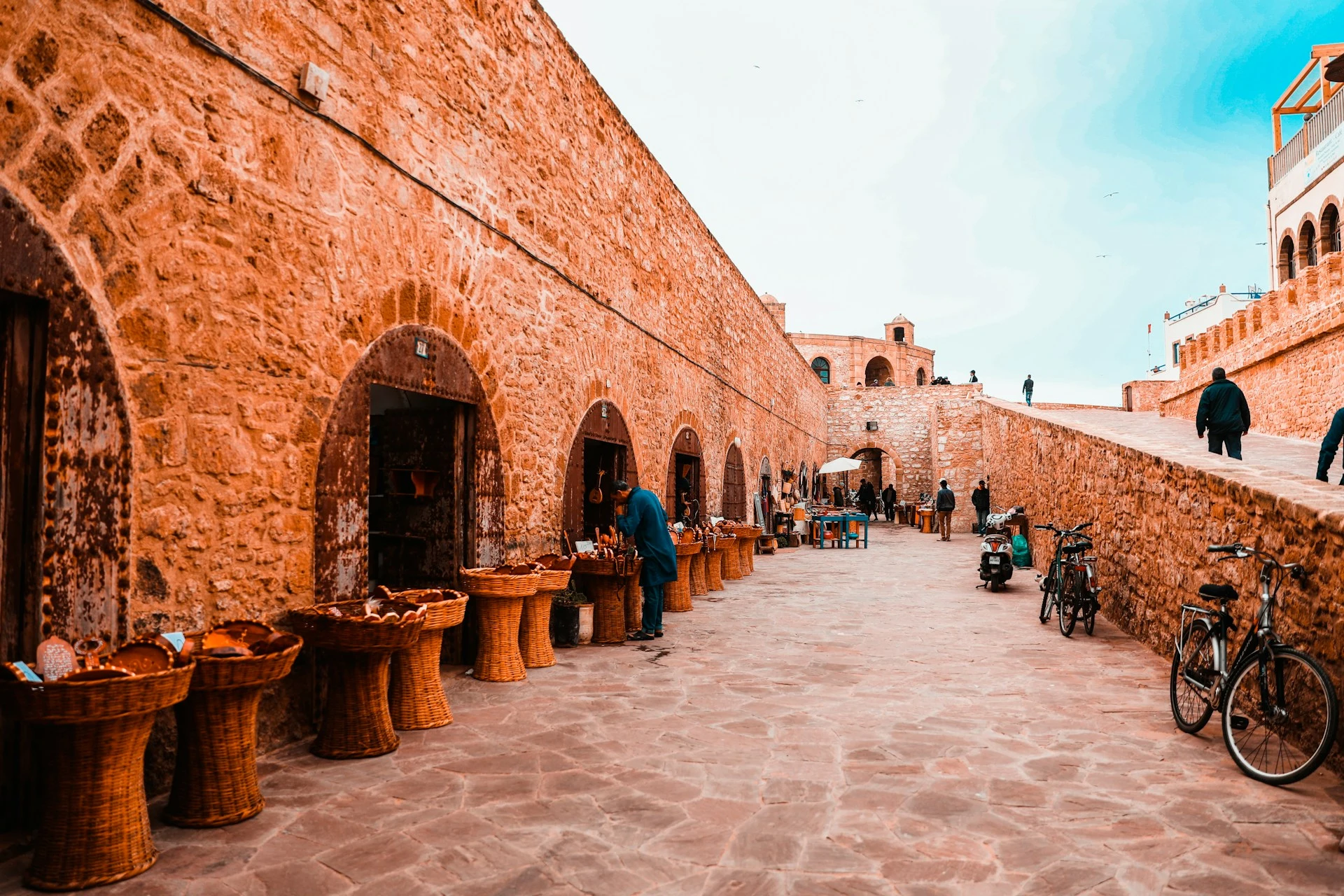
[ez-toc] 📍 Part of: The Complete Morocco Travel Guide Essaouira Travel Guide: Morocco's Laid-Back Atlantic Town After the intensity of Marrakech, Essaouira feels like exhaling....
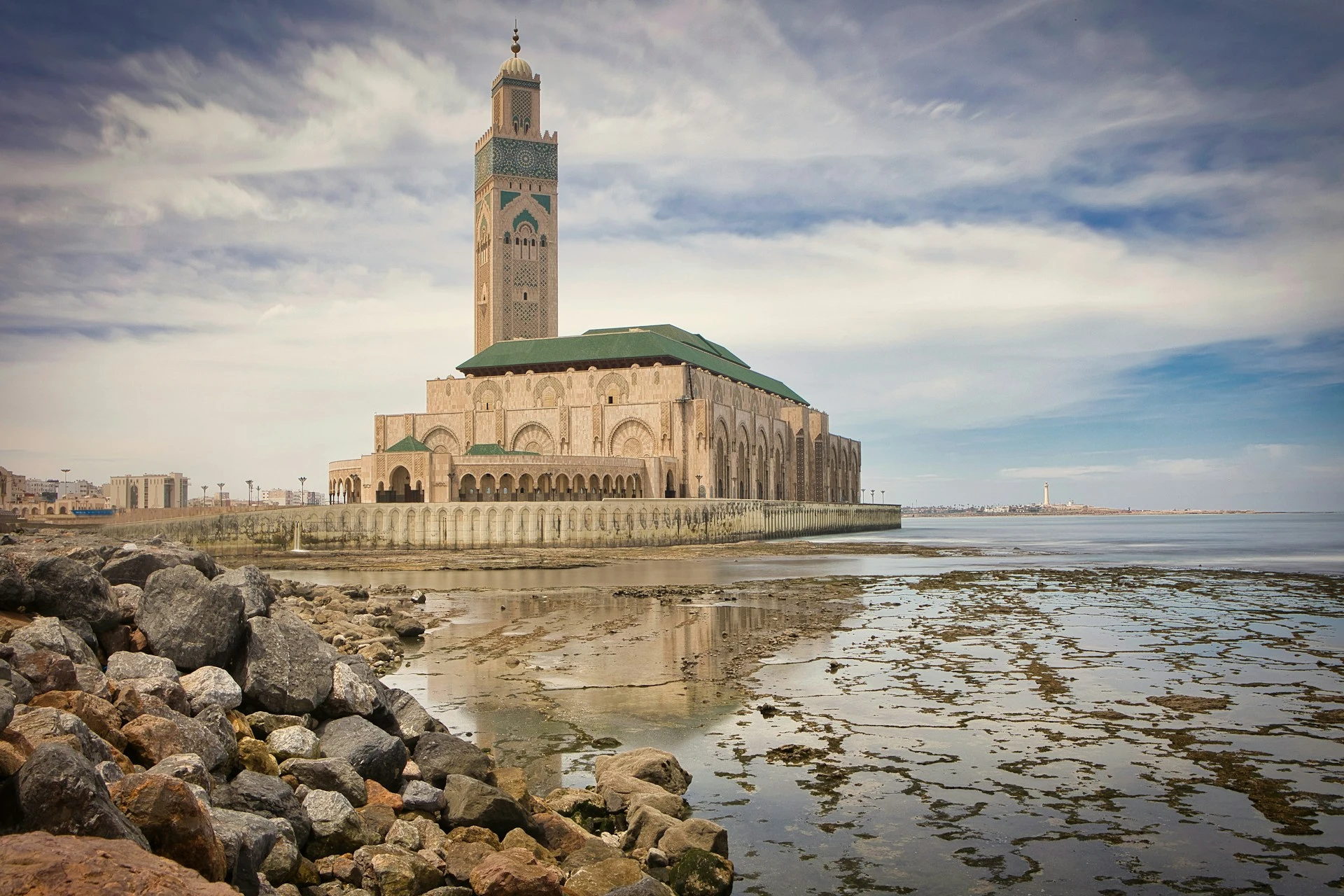
[ez-toc] Part of: The Complete Morocco Travel Guide Casablanca Travel Guide: Morocco's Modern Face Casablanca isn't the Morocco of postcards and ancient medinas and that's...
