Best Places To Visit in Casablanca
Best Places To Visit in Casablanca If you want to visit a Moroccan City that combines ancient charm and the new world’s modern marvels, then...
📍 Part of: The Complete Morocco Travel Guide
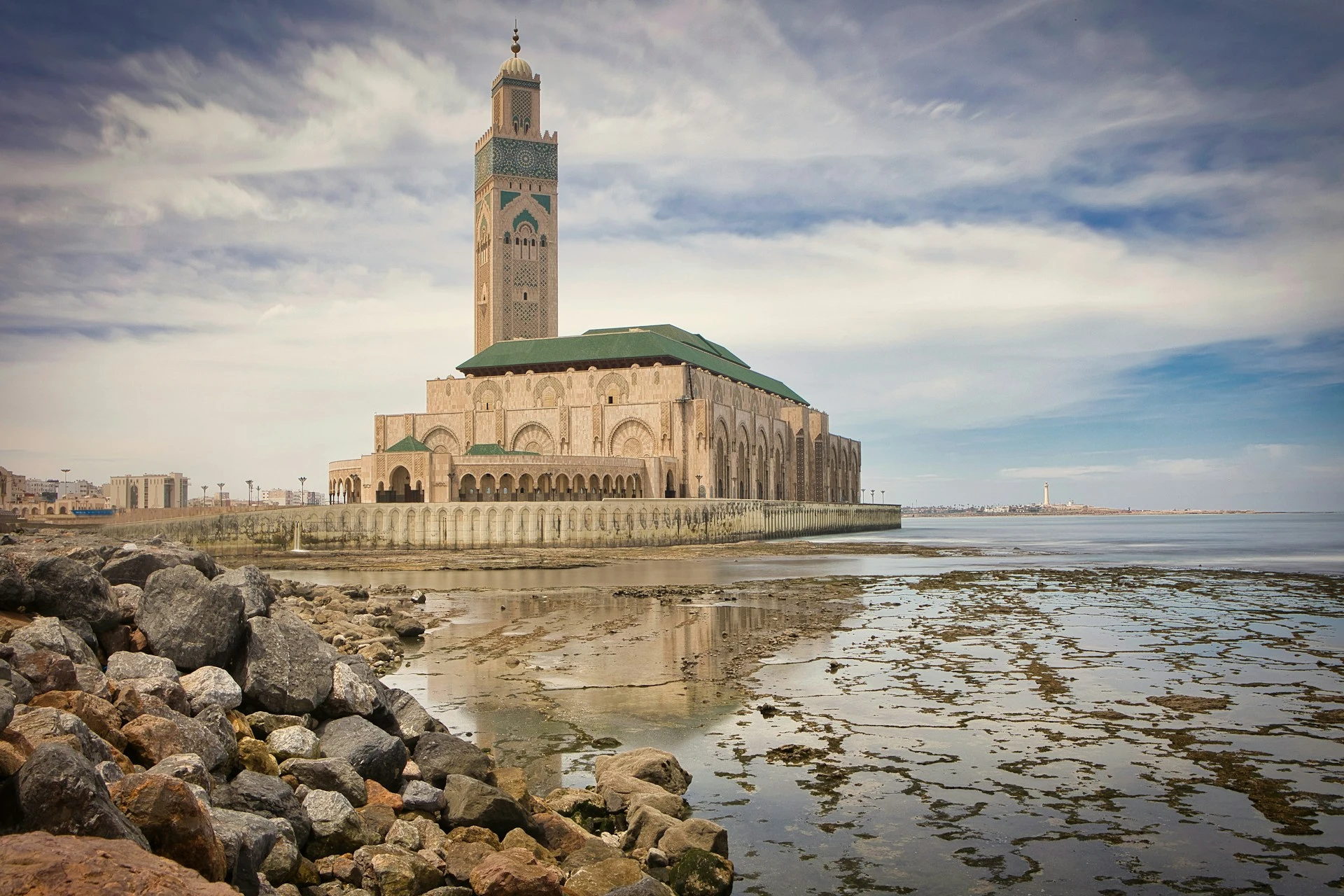
Casablanca isn’t the Morocco of postcards and ancient medinas and that’s exactly the point. As the country’s largest city and economic capital, it offers a different side of Morocco entirely: Art Deco boulevards, a colossal oceanfront mosque, a buzzing café and nightlife scene, and a cosmopolitan energy that blends tradition with contemporary life. For many travelers, it’s also the first and last stop in Morocco, thanks to its major international airport.
This guide covers what makes Casablanca worth your time, how to get around, and how it fits into a wider Morocco itinerary.
Casablanca sits on Morocco’s Atlantic coast, and with a population of over four million, it’s by far the country’s largest city and its commercial heart. Unlike Marrakech or Fes, Casablanca isn’t built around an ancient medina its character comes from Art Deco architecture dating to the French colonial era, wide seafront boulevards, and a skyline that mixes historic and modern.
Most international flights to Morocco land at Casablanca’s Mohammed V Airport, making it the starting point for many trips and increasingly a destination in its own right rather than just a transit hub.
Casablanca’s coastal location gives it a mild climate year-round, without the extreme summer heat of inland cities like Marrakech or Fes. Spring and autumn are particularly pleasant for exploring on foot, while summer suits the city’s beaches and Corniche promenade. Winters are mild but can be rainy.
Casablanca’s highlights center on its striking blend of religious grandeur, Art Deco heritage, and Atlantic-facing modern life.
For a full breakdown of attractions and neighborhoods, see Best Places to Visit in Casablanca
Casablanca’s size means taxis, ride-hailing apps, and the city’s tram network are the most practical ways to get around, especially between downtown, the Corniche, and the mosque.
Casablanca’s location and rail connections also make it a convenient base for day trips:
Rabat — Morocco’s capital is less than an hour away by train, making it one of the easiest and most popular day trips from Casablanca. Wander the Kasbah des Oudayas, the Hassan Tower, and the Royal Palace, all within a compact, walkable old town.
El Jadida — A coastal town about 1.5 hours south, with a UNESCO-listed Portuguese fortified old town (Cité Portugaise), an underground cistern, and quieter beaches than Casablanca’s own.
Both make for a comfortable day trip by train (Rabat) or grand taxi/private transfer (El Jadida), leaving Casablanca in the morning and returning the same evening.
As Morocco’s largest city, Casablanca has the country’s most diverse food scene — from traditional Moroccan restaurants to international cuisine, fresh seafood at the port, and a thriving café culture along the Corniche.
We’re working on a dedicated guide to the best restaurants in Casablanca — check back soon for specific recommendations across each of these areas.
Casablanca offers Morocco’s widest range of international hotel brands and business-friendly accommodation, concentrated in a few key areas:
For most short visits, the Corniche offers the best balance of atmosphere and convenience, while downtown suits travelers prioritizing proximity to the mosque and historic center.
👉 We’re working on a dedicated guide to where to stay in Casablanca — check back soon for specific hotel and riad recommendations.
Yes, especially for travelers interested in modern Moroccan culture, architecture, and city life. While it lacks the ancient medinas of Marrakech or Fes, the Hassan II Mosque alone is one of Morocco’s most impressive sights, and the city offers a side of Morocco many visitors miss.
One to two days is enough to see the Hassan II Mosque, explore the Art Deco downtown and Corniche, and get a feel for the city. Many travelers combine it with a day trip to Rabat.
Yes. Most international flights land at Casablanca’s Mohammed V Airport, and the city’s rail connections make it easy to continue on to Rabat, Marrakech, Fes, or Tangier.
The Hassan II Mosque, one of the largest mosques in the world built on the Atlantic coast, its Art Deco architecture from the French colonial era, and its role as Morocco’s economic and commercial capital.
Yes. Rabat is less than an hour away by train, making it one of the most convenient day trips from Casablanca.

Best Places To Visit in Casablanca If you want to visit a Moroccan City that combines ancient charm and the new world’s modern marvels, then...
