10 Best Cheap Hotels in Fes: Budget Stays from $20
Finding affordable accommodation in Fes doesn't mean sacrificing comfort or authentic Moroccan experiences.
Fes is Morocco’s most captivating city and the one that rewards curious travellers most generously. While Marrakech has its spectacle and Chefchaouen its colours, Fes has something rarer: depth. A 1,200-year-old medina where life continues much as it always has, extraordinary Islamic architecture, world-class craftsmanship, and a food scene that is the envy of the entire country.
In this guide, you’ll find the 15 best things to do in Fes from the iconic landmarks every visitor should see, to the hidden experiences only locals know about. Written by a local Morocco travel expert, with real opening hours, entrance fees, and insider tips.
The medina of Fes el-Bali is the single greatest reason to visit this city. Founded in 789 AD, it is the world’s largest car-free urban area and one of the best-preserved medieval cities on earth. A UNESCO World Heritage Site since 1981, it contains over 9,000 narrow alleys, 300 mosques, and a population of several hundred thousand people living and working as they have for centuries.
Simply wandering getting deliberately lost is the best way to experience it. Donkeys carry goods through streets too narrow for any vehicle. Artisans work in open workshops, hammering copper, weaving carpets, and hand-painting ceramics. The sounds, smells, and textures are unlike anything else in the world.
💡 Local Tip: For your first day, hire a licensed guide (ask your riad never accept street offers). After one guided morning, you’ll have the confidence and orientation to explore independently. The two main arteries Talaa Kebira and Talaa Seghira both lead back to Bab Bou Jeloud if you get lost.
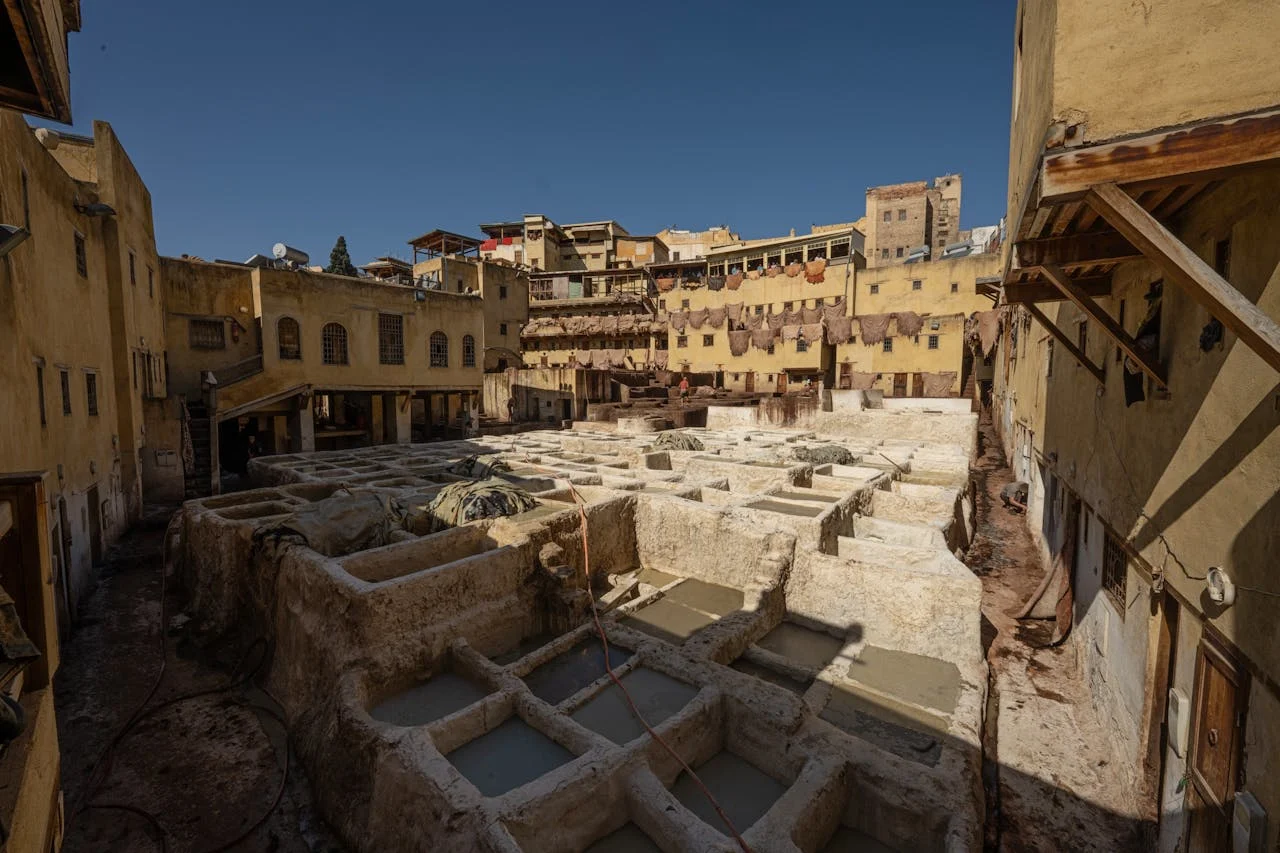
The Chouara Tanneries are the most iconic image of Fes and one of the most extraordinary sights in all of Morocco. Dating back to the 11th century, these are the world’s oldest leather tanneries still in operation, using methods almost completely unchanged for over a thousand years.
Leather hides are soaked in white chalk to remove hair, then transferred to stone vats filled with natural dyes: poppy for red, indigo for blue, saffron for yellow, mint for green, and cedarwood for brown. The result is Morocco’s world-famous leather sold in every souk in the country.
The best view is from the leather shop terraces above the tanneries most shops allow free access to their terrace if you browse. A sprig of fresh mint is often handed to visitors to counteract the strong smell of the dye vats.
The Bou Inania Madrasa is the finest example of Marinid Islamic architecture in Morocco and one of the most beautiful buildings on the African continent. Built between 1350 and 1357 AD as a theological college, it showcases three distinct layers of decoration that leave every visitor breathless:
The central courtyard with its marble fountain, the students’ cells arranged over two floors, and the carved wooden minbar (pulpit) are all extraordinary. This is the most accessible religious monument in Fes for non-Muslim visitors.
The Bab Bou Jeloud popularly known as the Blue Gate is the most photographed landmark in Fes and the main ceremonial entrance to Fes el-Bali. Built in 1913, it is decorated with stunning tilework in two colours that carry deep symbolism: blue on the exterior (the colour of Fes) and green on the interior (the colour of Islam).
The gate frames the beginning of Talaa Kebira, the medina’s main artery, and the view through it towards the minarets beyond is one of Morocco’s great photographic moments.
Founded in 859 AD by Fatima al-Fihri, Al-Qarawiyyin is recognised by UNESCO and the Guinness World Records as the world’s oldest continuously operating university. It predates Oxford by over 300 years. The mosque itself can accommodate 22,000 worshippers and is one of the largest in Africa.
Non-Muslims cannot enter the mosque or university, but the experience of standing at the ornate doorways hearing the call to prayer echo across the medina, glimpsing the carved plasterwork and tiled courtyards within is profoundly moving. A licensed guide will bring the 1,200-year history to life.
The Mellah is Fes’s historic Jewish quarter, established in the 15th century and one of the oldest Jewish quarters in Morocco. It offers a fascinating counterpoint to the Islamic medina: distinctive balconied architecture, narrower streets with European influences, and a layered history of Sephardic Jewish, Moroccan, and Andalusian culture.
Highlights include the Ibn Danan Synagogue (one of Morocco’s oldest, beautifully restored) and the Jewish cemetery. The Mellah is now predominantly Muslim but has been carefully preserved as a cultural heritage site.
The Royal Palace of Fes is one of Morocco’s most impressive monuments though as a working royal residence, the interior is closed to the public. What visitors come to see are the seven monumental brass doors, each set within an ornate mosaic facade of hand-cut zellij tilework in gold, blue, and green. The scale and craftsmanship are staggering.
The palace complex covers 80 hectares and its outer walls stretch for kilometres. The main gate square is one of the best photography spots in Fes, particularly in the late afternoon light.
For the most spectacular panoramic view of Fes, climb to the Merenid Tombs on the hilltop north of the medina. These 14th-century royal mausoleums are partially ruined but the view they command over Fes el-Bali is breathtaking the medina’s sea of rooftops, minarets, and the surrounding hills stretching to the horizon.
This is the best spot in Fes for sunset arrive 45 minutes before dusk and watch the city turn gold.
Set inside a beautifully restored 18th-century funduq (a caravanserai historic inn for travelling merchants), the Nejjarine Museum is one of Fes’s hidden gems. It displays an extraordinary collection of traditional Moroccan woodworking: carved furniture, musical instruments, doors, and decorative objects spanning several centuries.
The building itself is as impressive as the collection three levels of carved cedar galleries surrounding a tiled central courtyard with a sculpted fountain. The rooftop terrace café offers excellent views over the medina rooftops.
A hammam (Moroccan steam bath) is one of the most authentic cultural experiences you can have in Fes and one that locals genuinely use several times a week. The ritual involves a steam room, a vigorous kessa (exfoliating mitt) scrub that removes dead skin, and a beldi black soap massage.
There are two types in Fes:
💡 Local Tip: Bring your own flip-flops, a change of clothes, and a towel. The hammam experience typically takes 1–1.5 hours. Most hammams have separate hours or sections for men and women.
Shopping in Fes is an experience in itself and the quality of craftsmanship here surpasses anything you’ll find in Marrakech’s more touristy souks. Each craft has its own dedicated quarter in the medina:
💡 Bargaining Tips: Bargaining is expected start at 40–50% of the asking price and meet somewhere in the middle. Never feel pressured. Walking away often brings the price down further. Fixed-price cooperatives exist if you prefer not to bargain.
Just 60 km from Fes, this is the most rewarding day trip from the city and one of the best days you can have in Morocco.
How to do it: Grand taxi from Fes to Meknes (25–35 MAD per seat, 1 hour). From Meknes, hire a grand taxi to Volubilis (150–200 MAD return, including waiting time). Return to Fes by train or taxi.
The Borj Nord is a 16th-century Portuguese-built fortress on the hill north of the medina. It now houses an interesting Arms Museum with an impressive collection of historic weapons, armour, and cannons including a cannon reputedly captured from the Portuguese at the Battle of the Three Kings (1578).
But the main reason to visit is the view: from the fortress ramparts, the entire medina of Fes spreads out below you a sea of rooftops, minarets, and the surrounding hills. Combined with the nearby Merenid Tombs walk, this makes for an excellent half-morning excursion.
One of the best ways to deepen your experience of Fes is to learn to cook its iconic dishes. Several riads and cooking schools offer half-day classes that begin with a guided visit to the medina spice market, followed by hands-on cooking of 3–4 traditional Fassi dishes tagine, couscous, bastilla, and Moroccan salads culminating in eating your creation for lunch.
For a complete change of scenery, the Middle Atlas mountains are just 60–90 minutes from Fes by grand taxi and the contrast with the ancient medina is extraordinary.
Fes is most famous for three things: its ancient medina (the world’s largest car-free urban area and a UNESCO World Heritage Site), the Chouara Tanneries (the world’s oldest leather tanneries still in operation), and its cuisine Fes is Morocco’s culinary capital and birthplace of dishes like Bastilla and Rfissa.
A minimum of 2 full days covers the essential highlights: the medina, Chouara Tanneries, Bou Inania Madrasa, Al-Qarawiyyin, and Bab Bou Jeloud. 3 days allows you to add a day trip to Meknes and Volubilis. With 4–5 days you can explore the Middle Atlas, take a cooking class, and truly get lost in the medina at your own pace.
Yes walking through the medina is completely free. Individual attractions within it charge small entrance fees: Bou Inania Madrasa (20 MAD), Nejjarine Museum (20 MAD), Borj Nord Arms Museum (20 MAD), Ibn Danan Synagogue (10 MAD). The Chouara Tanneries are viewable for free from leather shop terraces.
No the mosques and Al-Qarawiyyin University in Fes are not open to non-Muslims. However, you can admire the extraordinary interiors from the doorways, and a licensed guide will provide full historical and architectural context. The Bou Inania Madrasa (a religious school, not a mosque) is open to all visitors.
The best day trip from Fes is the combination of Meknes and Volubilis Morocco’s fourth imperial city paired with its finest Roman ruins. The journey takes about 1 hour each way by grand taxi, allowing a full day of sightseeing. The cedar forest of Azrou with its wild Barbary macaques is the best nature day trip.
Fes is the best city in Morocco for authentic crafts. The top purchases are: blue-and-white Fassi ceramics (the most distinctive in Morocco), tannery leather goods (bags, babouches, jackets), hand-woven carpets and textiles, and Moroccan spices and argan oil from the spice souks near Rcif Square.
They offer very different experiences. Marrakech is more accessible, more international, and more geared to tourism easier for first-time visitors to Morocco. Fes is more authentic, historically deeper, less commercialised, and more rewarding for travellers who want a genuine cultural experience. If you can only visit one, Fes offers something more rare and memorable.
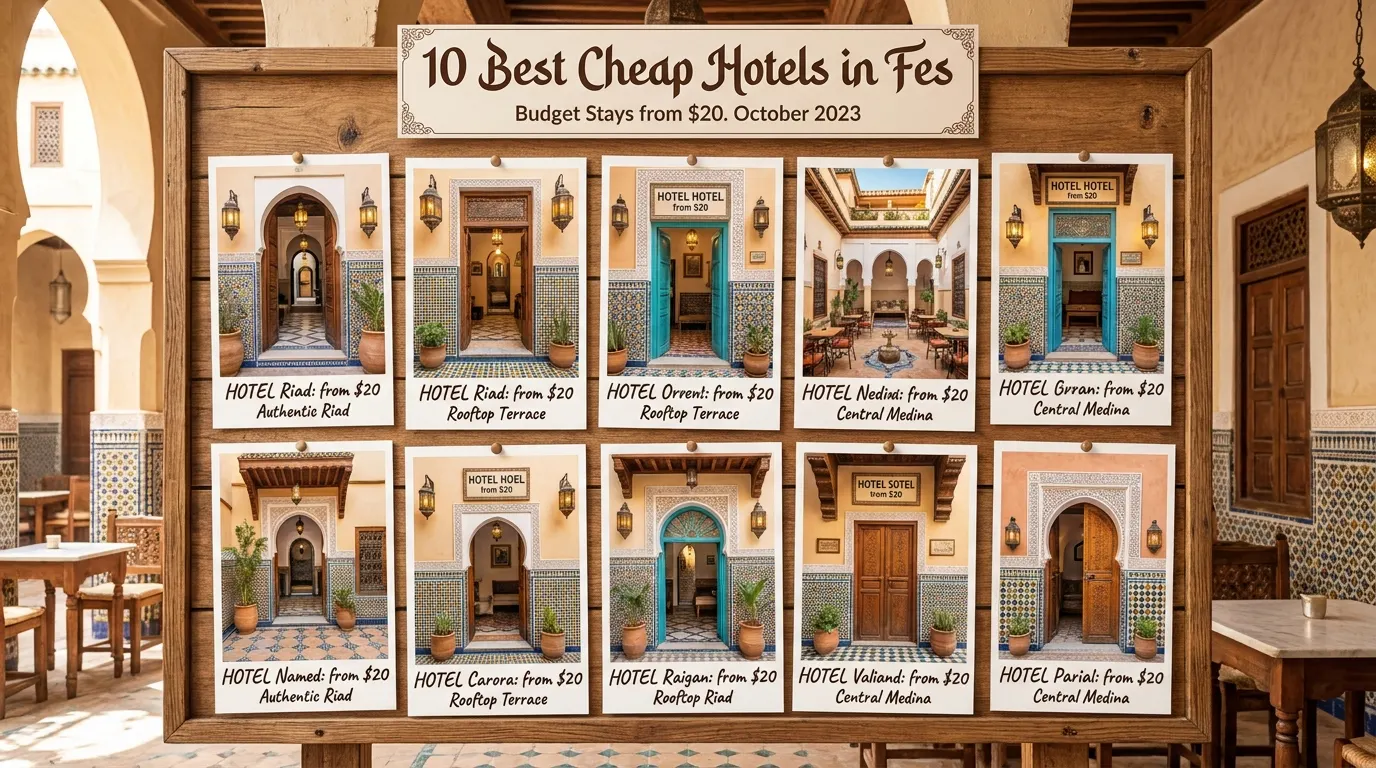
Finding affordable accommodation in Fes doesn't mean sacrificing comfort or authentic Moroccan experiences.
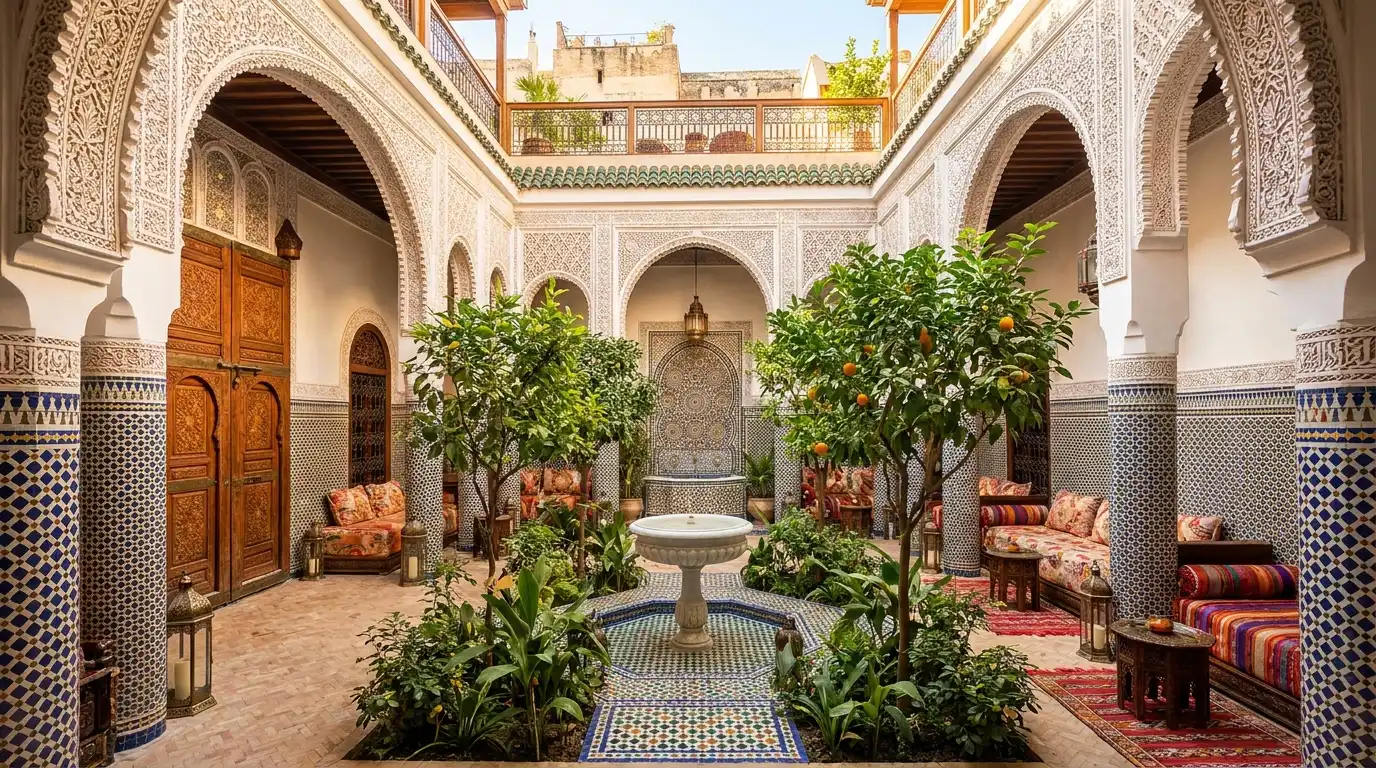
[ez-toc] Good to know: Riad prices in Fes can change throughout the year, especially during peak travel seasons, festivals, and holidays. The price ranges listed...
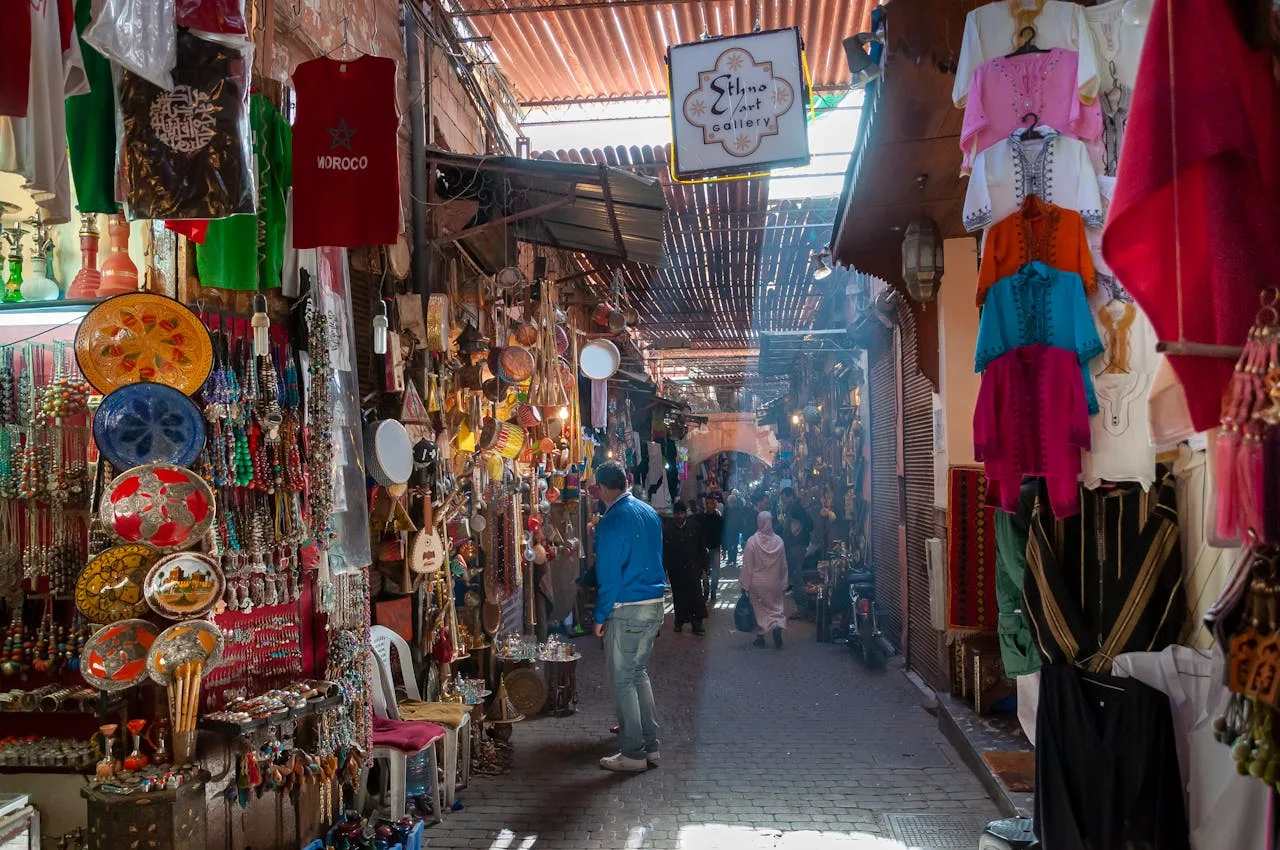
This detailed Fes medina walking route takes you through Bab Boujloud to Tanneries Chouara in 3-4 hours, with specific street names, local workshop stops, and navigation tips to avoid getting lost in the 9,400 alleyways of Fes el-Bali.
