Windsurfing in Morocco: Best Places for an Unforgettable Ride
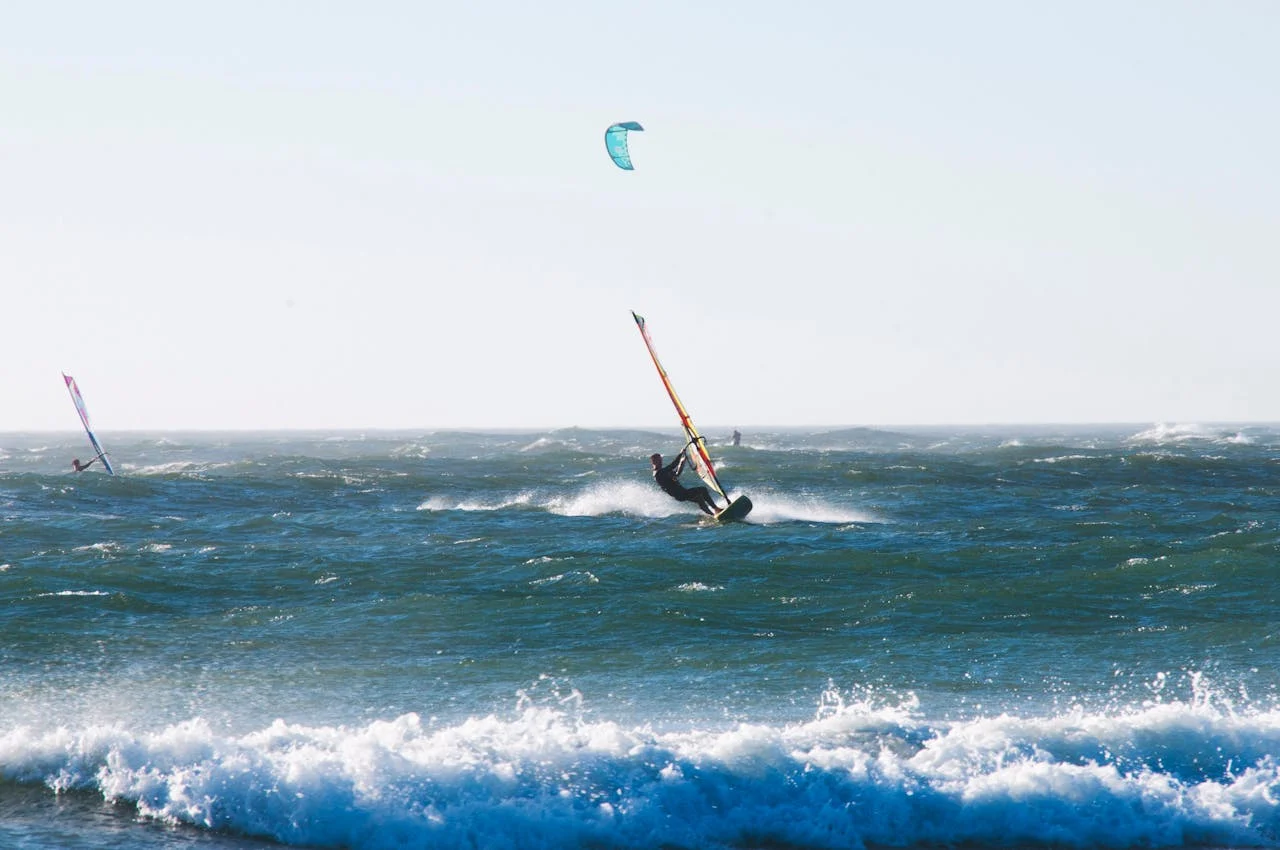
Few countries on earth deliver a windsurfing experience quite like Morocco. Stretching nearly 1,800 kilometres along the Atlantic coast, this North African kingdom sits at the convergence of powerful trade winds, dramatic ocean swells, and landscapes that feel borrowed from a dream. Whether you’re carving through the glassy flatwater of a Saharan lagoon or launching into white-crested waves off a windswept headland, windsurfing in Morocco is an experience that stays with you long after the salt dries on your skin.
Morocco has quietly become one of the world’s premier destinations for wind and water sports. It draws world-champions and first-time riders alike, seduced not only by the reliable winds and varied conditions, but by everything surrounding the sport the aromatic medinas, the saffron-coloured dunes rolling toward the sea, the mint tea poured from theatrical heights, the sunsets that turn the Atlantic a molten shade of gold. This is not just a windsurfing trip. It is an immersion in one of the most sensory-rich cultures on the planet.
This guide takes you through the best windsurfing spots in Morocco, the ideal seasons to visit, what to expect from schools and rental centres, and how to make the most of your time on and off the water.
Why Morocco Is a Paradise for Windsurfers
Consistent, Powerful Winds
Morocco’s position on the northwestern edge of Africa places it squarely in the path of the North Atlantic trade winds. Known locally as the alizé, these winds blow with remarkable consistency particularly along the southern Atlantic coast providing the kind of reliable conditions that windsurfers travel continents to find. In many spots, you can count on strong afternoon winds nearly every day between spring and autumn, with some locations offering year-round riding.
A Coastline Built for Adventure
Morocco’s Atlantic coast is extraordinarily diverse. In the far south, around Dakhla, you’ll find sheltered lagoons with millpond-flat water stretching for kilometres. Further north, the coastline becomes increasingly dramatic rugged headlands, sea stacks, and exposed beaches that absorb the full force of the open ocean. In between lies every conceivable wind and wave condition, from protected bays suited to beginners learning their first water starts, to gnarly reef breaks that challenge the world’s best freeriders and wave specialists.
Accessible and Affordable
Compared to the classic European windsurfing destinations Tarifa in Spain, Fuerteventura in the Canaries, Leucate in France Morocco offers exceptional value. Accommodation, food, equipment hire, and lessons all come at a fraction of the cost you’d pay in Western Europe. Direct flights from most European capitals take under three hours, and the time difference is negligible. For riders who want to maximise water time without decimating their budget, Morocco is hard to beat.
A Cultural Experience Like No Other
Beyond the wind, Morocco rewards the curious traveller with extraordinary depth. Ancient medinas, Berber villages, spice souks, Saharan kasbahs, and a cuisine ranked among Africa’s finest the country offers a full-sensory adventure on shore to complement the thrills at sea. Many windsurfers find that Morocco changes not just how they ride, but how they travel.
Best Windsurfing Spots in Morocco
Dakhla Lagoon: The Flat-Water Jewel of the Sahara
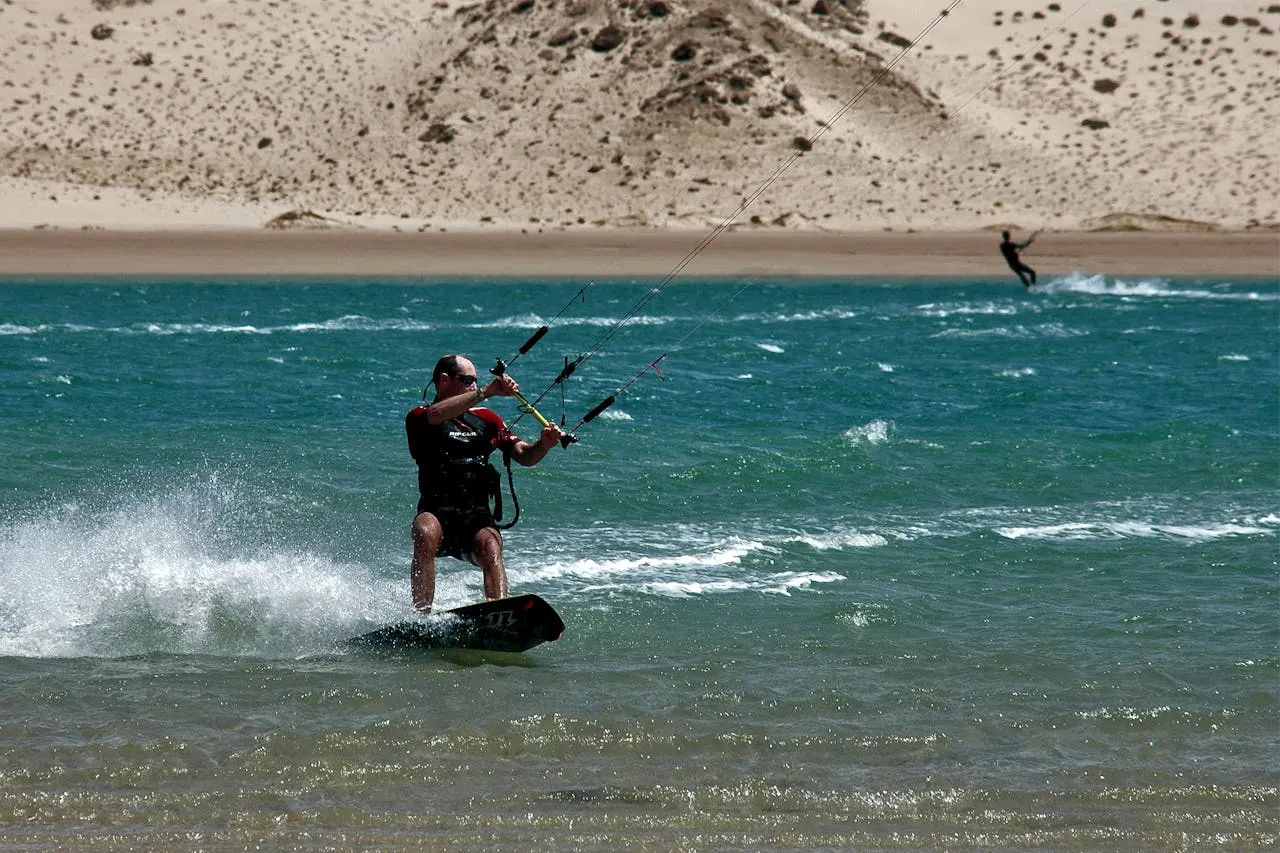
If there is a single destination that has transformed Morocco’s status in the global windsurfing world, it is Dakhla. Located in the Western Sahara region roughly 1,700 kilometres south of Casablanca, this remote peninsula encloses a vast tidal lagoon approximately 40 kilometres long and protected from Atlantic swell by a narrow strip of desert. The result is a vast expanse of flat, shallow, turquoise water that feels almost too perfect to be natural.
Wind conditions here are extraordinary. The alizé blows steadily from the north and northeast, typically between 18 and 30 knots, for most of the year. Because the lagoon is sheltered from significant wave action, riders of all abilities can access the same stretch of water beginners practising their water starts in the shallows while advanced freeriders blast upwind at full speed just metres away. Kitesurfers share the space harmoniously, making Dakhla windsurfing a genuinely mixed water sports community.
- Best Season: April through October offers the most consistent winds, with summer months (June–August) bringing the strongest and most reliable conditions. Winter can still deliver good wind, though with greater variability.
- Skill Level: All levels. The flat water and consistent wind make it the ideal learning environment, while the open stretches reward experienced riders seeking speed.
- Where to Stay: A cluster of dedicated kitesurfing and windsurfing camps lines the lagoon’s shore the likes of Dakhla Attitude and ION Club offer full-service accommodation, equipment rental, and instruction. The town of Dakhla, a 20-minute drive away, provides a wider range of hotels and restaurants.
- Getting There: Dakhla has its own international airport with connections to Casablanca and direct seasonal flights from several European cities.
Essaouira: Wind, Waves, and Blue-Walled Splendour
There is nowhere quite like Essaouira. This fortified Atlantic city a UNESCO World Heritage Site sits on a headland 170 kilometres north of Agadir, directly exposed to the full force of the trade winds. The Gnawa people call the wind here l’alizé; the windsurfers simply call it epic. Essaouira is consistently ranked among the windiest inhabited places in the world, with afternoon winds regularly exceeding 25–35 knots throughout summer.
The beach stretching south of the city walls, known as Essaouira Beach or Sidi Kaouki Road beach, is the primary windsurfing ground. With a long, sandy shoreline, a reliable side-shore wind, and a mix of flatwater and wave sections, it caters to freeriders and wave enthusiasts equally. For those seeking pure wave riding, the northern shore near the medina produces more powerful, hollow conditions when northerly swells combine with the wind challenging, exhilarating, and deeply photogenic against the backdrop of the old Portuguese ramparts.
Windsurfing Essaouira carries an additional pleasure that few other spots in the world can match: the spectacle on shore. The medina, with its blue-washed walls, whitewashed buildings, and labyrinthine souks selling argan oil, thuya woodcarvings, and silver jewellery, is one of Morocco’s finest. After a session on the water, you’re a short walk from rooftop cafés, fresh-grilled sardine stalls, and the haunting rhythms of Gnawa musicians performing in the square. It is a town that captures the spirit rather than just the wind.
- Best Season: April through September for consistent, powerful winds. Summer (July–August) brings the strongest conditions and can be testing even for experienced riders.
- Skill Level: Intermediate to advanced. The consistent strong winds can be overwhelming for complete beginners; lessons are available at the local clubs.
- Key Attraction: Combine a dawn session on the water with an afternoon exploring the medina few days in Morocco rival it.
Taghazout: The Soul Surfer’s Coastline
Perched on a rocky headland 20 kilometres north of Agadir, Taghazout has long been a pilgrimage site for surfers seeking uncrowded point breaks and a relaxed, easy lifestyle. In recent years, windsurfers have increasingly joined the wave-hungry crowd, drawn by the quality of Atlantic swell and the laid-back character of the town.
The beaches around Taghazout Hash Point, Anchor Point, Panoramas are primarily known for their surf, but windsurfers find excellent conditions when the seasonal swells are running and the wind turns offshore. The surrounding area offers a string of beaches ranging from sheltered coves to exposed reef breaks, meaning you can generally find a rideable spot regardless of the day’s conditions.
Taghazout itself has transformed considerably in the past decade, with a new purpose-built resort development (Taghazout Bay) bringing international hotels alongside the village’s original guesthouses and surf camps. Despite the development, the town retains a soulful, artisan character fishermen still haul their boats onto the beach at dusk, and the café terraces overlooking the Atlantic remain among the most peaceful places on the Moroccan coast.
- Best Season: October through April for optimal surf and wind conditions.
- Skill Level: Intermediate to advanced. Best suited for riders comfortable with wave conditions.
- Nearby Attractions: Paradise Valley (a series of natural rock pools and waterfalls inland from Agadir), Souss-Massa National Park, and the charming town of Tiznit.
Sidi Kaouki: Wild, Windy, and Wonderfully Uncrowded
Fourteen kilometres south of Essaouira along a track that unspools through argan forest and Atlantic scrub, Sidi Kaouki is the antithesis of a tourist hotspot and all the better for it. The beach here is vast, wild, and largely empty. A marabout (saint’s tomb) perches on a rocky islet just offshore, giving the village its name and its quietly spiritual atmosphere.
Wind conditions at Sidi Kaouki are, if anything, even more consistent than Essaouira, thanks to the slightly more exposed aspect of the beach and the long fetch of open Atlantic water to the north. Side-shore winds in the 20–28 knot range are the norm throughout the summer months. The sea conditions are more consistent here than in Essaouira less choppy in the nearshore zone, with clean, well-spaced wave sets further out making it a favourite among intermediate riders looking to progress.
There are a handful of small guesthouses and one or two windsurf schools operating out of Sidi Kaouki, offering lessons and basic equipment hire. The accommodation is simple and the restaurant options limited to a couple of beachfront cafés, but this austerity only adds to the appeal for riders seeking immersion in something raw and unfiltered.
- Best Season: April through September.
- Skill Level: Intermediate. The powerful conditions and wave exposure make it less suitable for absolute beginners.
- The Extra Appeal: The extraordinary silence, the marabout at sunset, and the sense of having discovered something that has not yet been packaged for mass consumption.
Moulay Bouzerktoun: Where Champions Come to Train
Thirty kilometres north of Essaouira, Moulay Bouzerktoun (often abbreviated to “Moulay Bou” among the global windsurfing community) has a reputation that extends far beyond Morocco’s borders. This small village sits on a stretch of coastline that receives some of the most powerful, consistent wind in Africa a combination of strong trade winds, Atlantic swell, and favourable bathymetry produces conditions that have attracted the world’s best wave sailors for decades.
The PWA (Professional Windsurfers Association) World Tour has visited Moulay Bouzerktoun on multiple occasions, and the town has become synonymous with high-performance wave riding of the most committed variety. The swell here is genuine, powerful Atlantic ocean swell not the short, choppy wind-chop of a lagoon, but long-period waves that stand up on the rocky reefs and demand respect and skill to ride.
For advanced freeriders and wave sailors, Moulay Bou is something of a pilgrimage destination. The conditions will challenge and develop any rider who takes them seriously. For beginners or nervous intermediates, it is a destination to visit as a spectator first and a participant only after significant progression elsewhere.
- Best Season: May through September for the most consistent combination of wind and swell.
- Skill Level: Advanced. Not recommended for beginners or early intermediates.
- The Atmosphere: Despite its world-class status, Moulay Bou remains a small, humble village with a handful of accommodation options and a deeply local character. This is part of its charm.
Best Time for Windsurfing in Morocco
Morocco’s long Atlantic coast means conditions vary considerably by region and season, but a broad seasonal picture is useful for planning:
Spring (March–May): Wind conditions begin to strengthen, and the weather is warm without the summer heat. Dakhla and Essaouira are excellent choices. Swell is often good in the north. Ideal for intermediate riders looking for progressive conditions without extreme wind strengths.
Summer (June–August): Peak wind season along the central and southern Atlantic coast. Dakhla, Essaouira, and Sidi Kaouki are at their finest. Wind strength can be formidable (25–35 knots regularly), making this the domain of experienced riders. Water temperatures are pleasant, days are long, and the atmosphere at Morocco’s wind spots is at its most vibrant.
Autumn (September–November): Often considered the sweet spot for all-round conditions. Wind remains consistent but slightly moderated from summer peaks, swell begins building in the north, and the crowds thin noticeably. Taghazout and Moulay Bou come into their own. Excellent for intermediate and advanced riders alike.
Winter (December–February): Variable conditions. The southern spots (Dakhla) can still deliver, and experienced wave sailors head north for quality swell. Less reliable for beginners. The upside: Morocco’s cultural attractions are at their most accessible, accommodation prices drop significantly, and the desert interior is at its most hospitable.
Recommendation for Beginners: Target Dakhla between April and October for the most consistent, manageable conditions.
Recommendation for Advanced Riders: Moulay Bou and Essaouira in summer; Taghazout in autumn.
Windsurfing Schools and Equipment Rental
Morocco’s growing reputation as a Morocco water sports destination has generated a solid infrastructure of schools and rental centres at all the main spots.
Dakhla has the most developed offering, with several large camps providing international-standard Fanatic, JP, and North/Gaastra equipment, multilingual instructors, and structured lesson programmes from beginner to wave-riding clinics. ION Club, Dakhla Attitude, and Dakhla Club are well-regarded options with strong reputations in the European market.
Essaouira has a cluster of small schools operating from the beach south of the medina. Equipment quality varies, so it is worth checking recent reviews before committing. For beginners, the Explora Outdoor Centre and Club Mistral have provided lessons for many years.
Taghazout and Sidi Kaouki offer more modest rental and lesson services, suitable for those needing occasional support rather than full programmes.
Safety Considerations: Always check the condition of rental equipment before use. Confirm that the school provides safety vests and helmets, and that instructors hold recognised qualifications (IKO, VDWS, or RYA certifications are the most common). Understand the local hazards rocks, shipping channels, offshore winds before launching. In Dakhla especially, the lagoon’s size means getting lost is a genuine risk in poor visibility; always carry a whistle and stay within sight of shore until you know the venue well.
Travel Tips for Windsurfers Visiting Morocco
Transportation: Domestic flights connect Casablanca and Marrakech to Agadir, Essaouira, and Dakhla. Car hire is affordable and the most practical option for exploring the coast. Roads are generally good on the main Atlantic highway (N1), though deteriorate on coastal tracks. A 4WD is useful for reaching more remote spots.
Accommodation: Range is extraordinary from luxury boutique riads in Essaouira’s medina to simple wind camp bungalows in Dakhla. Book well in advance for July and August, particularly in Dakhla where camp capacity is limited.
Local Customs: Morocco is a Muslim country. Dress modestly away from the beach shoulders and knees covered in towns and markets. Learn a few words of Arabic or Darija (Moroccan Arabic); it is received with warmth. Friday is the holy day; expect some businesses to close at midday. Respect during the call to prayer.
Safety Advice: Drink bottled water. Keep valuables secured, particularly at busy beaches. Be aware of strong currents and offshore winds at exposed beaches always check conditions with local knowledge before launching.
Packing Essentials: High-factor sun protection (the Moroccan sun is intense even with sea breeze), a wetsuit or shorty for winter/spring sessions, board shorts and rash vest for summer, a good windbreaker for evenings on the coast, and a first-aid kit. If you’re bringing your own equipment, check airline policies carefully oversized equipment fees can be significant.
Beyond Windsurfing: Exploring Morocco’s Coast
The Atlantic coast of Morocco is far more than a wind corridor. Between sessions, the rewards are considerable.
Local Cuisine: Moroccan coastal food is exceptional. Fresh-grilled fish and seafood dominate menus in every coastal town try the fried sardines at a beachside stall in Essaouira, the tiger prawns in Agadir’s port, or the slow-cooked fish tagine with preserved lemon and olives that appears on almost every menu in Dakhla. The mint tea ceremony, performed with theatrical ceremony at every café, is as much a social ritual as a refreshment.
Cultural Experiences: Essaouira’s medina is unmissable a UNESCO-listed labyrinth of white and blue buildings, centuries-old ramparts, and one of the most atmospheric music scenes in North Africa (the annual Gnawa and World Music Festival in June transforms the city). Further inland, the red ochre walls of Marrakech, the ancient Roman ruins of Volubilis, and the Saharan dunes around Merzouga offer some of the world’s great travel experiences, all within a few hours’ drive.
Outdoor Adventures: The Anti-Atlas mountains south of Agadir offer trekking, mountain biking, and rock climbing. The Souss Valley’s argan groves tended almost exclusively by women’s cooperatives offer a fascinating insight into Berber agricultural tradition. Whale and dolphin watching trips operate from several Atlantic ports.
Coastal Villages: Between the major windsurf destinations, the Atlantic coast is peppered with small Berber fishing villages where the rhythms of daily life continue largely unchanged blue and white painted boats on beaches of black volcanic sand, nets spread to dry in the morning sun, the smell of wood smoke and salt air. These villages reward the traveller who leaves the main road.
Conclusion: Why Windsurfing in Morocco Belongs on Every Rider’s Bucket List
Morocco has earned its place among the elite windsurfing destinations on the planet not through marketing, but through the sheer quality of what it delivers. The wind is real, reliable, and powerful. The variety of conditions, from Dakhla’s serene lagoon to Moulay Bou’s ferocious Atlantic waves, means that every level of rider finds a home here. The cost is reasonable, the climate forgiving, and the cultural richness incomparable.
But perhaps the most compelling argument for windsurfing in Morocco is the feeling that you are somewhere genuinely extraordinary somewhere the sport exists in conversation with ancient culture, wild landscape, and an ocean that stretches without interruption to the Americas. When you pack up your kit at the end of a long day on the water, the sun dropping into the Atlantic and the call to prayer echoing from a minaret behind the dunes, Morocco reveals itself as more than a windsurfing destination. It is one of the world’s great travel experiences. And the wind, always the wind, will call you back.
Frequently Asked Questions
Is Morocco good for beginner windsurfers?
Yes particularly Dakhla, where the flat lagoon and consistent winds provide ideal learning conditions. Several camps offer structured beginner programmes with certified instructors and quality equipment.
When is the best time of year to go windsurfing in Morocco?
For most riders, April through October offers the best combination of wind consistency and warm weather. Dakhla peaks in June–August; Essaouira and Moulay Bou are excellent May–September; Taghazout is best in autumn (September–November).
Can I bring my own windsurfing equipment to Morocco?
Yes, though airline excess baggage fees for oversized equipment can be significant. Royal Air Maroc and some charter airlines offer more favourable equipment policies. For shorter trips or first visits, it is usually more practical to rent at the destination.
Is windsurfing in Morocco safe?
Morocco’s main windsurf spots have established safety cultures and trained instructors. As with any wind sport destination, the key is understanding local conditions, checking the forecast, and never launching in conditions beyond your ability. Dakhla’s lagoon is particularly forgiving; the exposed Atlantic spots demand more experience and respect.
Can I combine windsurfing with cultural tourism in Morocco?
Absolutely this is one of Morocco’s great strengths as a destination. Essaouira places a UNESCO medina within walking distance of the beach. From Agadir, Marrakech and the Sahara are accessible for inland excursions. The whole Atlantic coast rewards exploration beyond the windsurf spots.
